


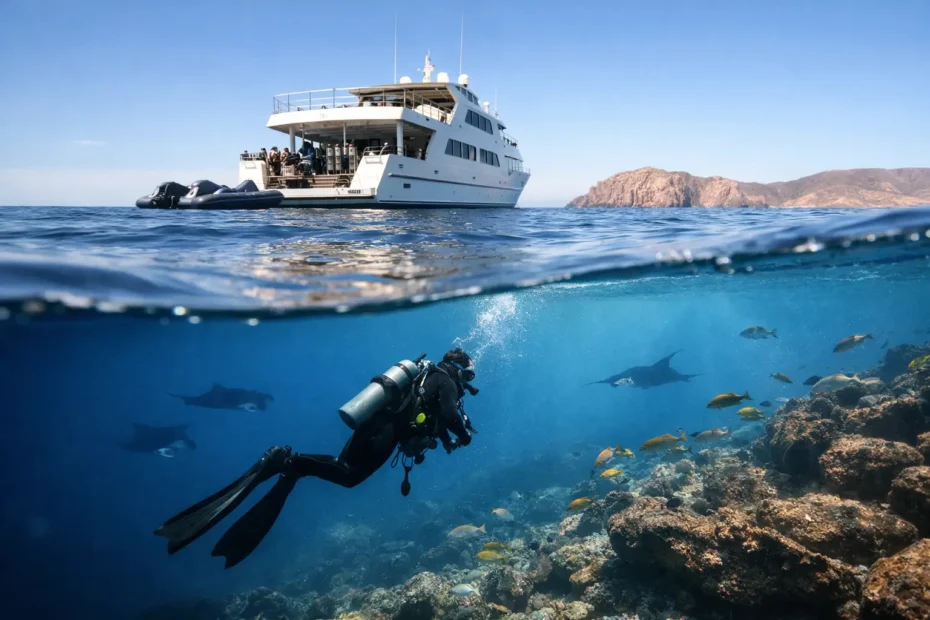
The first time a sea lion loops around your bubbles at Los Islotes, it is hard to remember you are only a few hours from La Paz. Then the boat carries on, beyond the day-trip traffic, toward volcanic islands, cobalt-blue passages, and dive sites that simply cannot be rushed. Sea of Cortez liveaboard diving is not just a way to log more dives. It is a chance to wake up already at the edge of Baja’s wildest underwater country.
For the right traveler, it is one of Mexico’s most rewarding marine adventures. For others, a carefully planned land-based dive itinerary may be the smarter choice. The difference comes down to what you want from your time on the water, your comfort with open-ocean conditions, and how much you value reaching places that are too distant for an ordinary day boat.
What Makes Sea of Cortez Liveaboard Diving Different
A liveaboard turns travel time into part of the experience. Rather than returning to shore after two dives, you sleep aboard the vessel and move through the Sea of Cortez overnight or between dive windows. Mornings can begin with a quiet reef check before breakfast. Afternoons may bring a second or third dive at a rocky seamount, followed by dinner under Baja’s remarkably bright stars.
The biggest advantage is access. Remote areas such as El Bajo, Las Animas, and, on longer expeditions, the islands farther north toward San Pedro Mártir can be difficult or impossible to visit comfortably on a standard La Paz day trip. These sites are where the sea feels less managed and more alive: schooling fish can darken a reef wall, mobulas may glide through the blue, and large pelagic animals have room to appear without an audience of boats.
There is also a lovely simplicity to life aboard. Your gear is set up once. Meals are handled. The captain and crew are focused on weather, routing, and finding the best possible conditions. Instead of coordinating taxis, restaurant reservations, and early-morning departures, you have one job: hydrate, rest, and be ready when the briefing begins.
That said, this is not a floating resort vacation with a few casual swims attached. It is an active marine trip. Cabins are compact, schedules follow daylight and conditions, and the sea gets the final vote. Travelers who embrace that rhythm usually come home glowing. Travelers who need a large private space, a fixed daily schedule, or plenty of time ashore may prefer a luxury hotel in La Paz paired with selected dive excursions.
The Marine Encounters You Can Hope For
The Sea of Cortez has earned its reputation through variety, not guarantees. It is a living ecosystem shaped by season, currents, water temperature, and plain old ocean luck. Any operator promising a specific animal on a specific day is selling a story, not responsible adventure travel.
Still, the possibilities are exceptional. Los Islotes is famous for its playful California sea lions, especially the younger animals that seem delighted by a curious diver. At offshore seamounts such as El Bajo, experienced divers may encounter schooling hammerheads in the blue, along with jacks, tuna, rays, and other fast-moving pelagic life. Las Animas can deliver dramatic reef scenery and fish-filled waters, while more northerly itineraries may offer a greater sense of remoteness and pristine island landscapes.
Seasonal surprises make Baja especially compelling. Mobula rays can gather in spectacular numbers during warmer periods. Whale sharks are often associated with the La Paz area in the cooler months, though their presence and access rules vary. Dolphins, turtles, octopus, nudibranchs, moray eels, and clouds of reef fish provide plenty to appreciate even when the large animals decide to keep their distance.
The real magic is not checking off a wildlife list. It is being present when the sea changes character. One dive may be all color and reef detail. The next may feel like hovering above a deep blue highway, waiting to see who passes through.
Sea Lions Are Fun, but Give Them Space
Sea lions are charismatic, quick, and endlessly entertaining, but they are still wild animals. Good guides encourage relaxed, respectful interactions rather than chasing, touching, or crowding them. Breeding seasons can also affect behavior, particularly around large territorial males.
The same rule applies everywhere in Baja: the best encounters happen when divers are calm, observant, and willing to let the animals choose the distance. That approach protects the wildlife and usually produces the more memorable moment anyway.
When to Go for a Sea of Cortez Liveaboard
There is no single perfect month because every season involves trade-offs. Water generally warms through late spring and summer, when visibility can be beautiful and marine activity feels abundant. These warmer months are popular with divers hoping for big-animal action, but surface heat can be intense and tropical weather may influence itineraries later in the season.
Fall often brings warm water and excellent potential conditions, though it remains a period when weather systems deserve close attention. A flexible attitude and a crew that puts safety ahead of a planned route matter enormously.
Winter and early spring can bring cooler water, windier days, and a different kind of richness. Visibility can be excellent, and the broader Baja region becomes especially exciting for whale lovers. If you get chilly easily, bring proper exposure protection and do not underestimate how much repeated dives can cool you down, even under a Baja sun.
When I help travelers choose dates, I start with their true priority. Is it hammerheads? Comfortable warm-water diving? Sea lions? A whale-focused vacation with a few dives added in? A relaxed private Baja itinerary before or after the boat departs? Once that is clear, the right season and vessel become far easier to identify.
Who Will Enjoy This Trip Most
Sea of Cortez liveaboard diving is best for certified divers who want to spend serious time in the water and are comfortable being part of a small onboard community. It works beautifully for couples who share the diving bug, groups of friends who want an unforgettable shared story, and experienced travelers who would rather see a remote island at sunrise than sit through another generic resort buffet.
Many trips are most comfortable for divers with recent experience in currents, blue-water descents, and changing surface conditions. Some itineraries have more demanding profiles than others, so certification alone is not the whole picture. A newer diver may be very welcome on the right boat and route, while a diver who has been out of the water for years might benefit from a refresher before boarding.
Non-diving partners should consider the itinerary with care. Snorkeling, island scenery, sea lions, and time on deck can be wonderful, but a dive-focused liveaboard does not offer the same range of activities as a land-based La Paz stay. In those cases, a customized split itinerary can be ideal: a few nights of comfortable coastal luxury, guided wildlife experiences, then a shorter expedition or private boat day.
What a Well-Planned Liveaboard Should Handle
The boat matters as much as the destination. You want a vessel with experienced local crew, sensible safety procedures, clear briefings, reliable communications, well-maintained dive operations, and meals that keep divers fueled rather than merely fed. Nitrox availability, cabin configuration, bathroom arrangements, rental gear quality, and dive-group size are not minor details. They shape the entire week.
Seasickness deserves an honest conversation too. Even seasoned sailors can have an off day when a crossing gets lively. The right medication, hydration, fresh air, a cabin location with less motion, and enough rest can make a significant difference. Do not wait until you are miserable to address it.
It is equally wise to build breathing room around the voyage. Arrive in La Paz at least a day before boarding when possible, especially if flights connect through another Mexican city. After disembarkation, avoid scheduling a flight that conflicts with safe post-dive intervals. A night or two ashore also gives you time to enjoy La Paz’s waterfront, local food, and that wonderful moment of returning to land with salt still in your hair.
At Sunny Adventure Travel, I personally look at the boat, the route, the season, and your diving history before recommending a trip. Baja is too special for a one-size-fits-all booking. The goal is not simply to put you on a liveaboard. It is to put you on the right one, with realistic expectations and every practical detail handled.
Pack for the Ocean You Actually Have
Baja sunshine can fool people into underpacking for wind and cool evenings. Bring layers for the deck, sun protection that stays put in salty air, a reusable water bottle, and any seasickness remedies you know work for you. Your exposure suit should match the season and your own tolerance, not the optimistic temperature on a brochure.
A surface marker buoy, audible signaling device, reef-safe personal-care products, and a small dry bag are sensible additions. If you use prescription medication, pack it in your carry-on. And if camera gear is coming with you, practice with it before the trip. A hammerhead silhouette in the blue is not the ideal time to discover an unfamiliar housing setting.
The Sea of Cortez rewards travelers who arrive prepared but stay open to surprise. Let the itinerary provide the framework, then leave room for the moments no one can schedule: a sea lion’s curious stare, a silent school of fish turning as one, or a calm dawn when Baja’s desert islands seem to float above the water.