


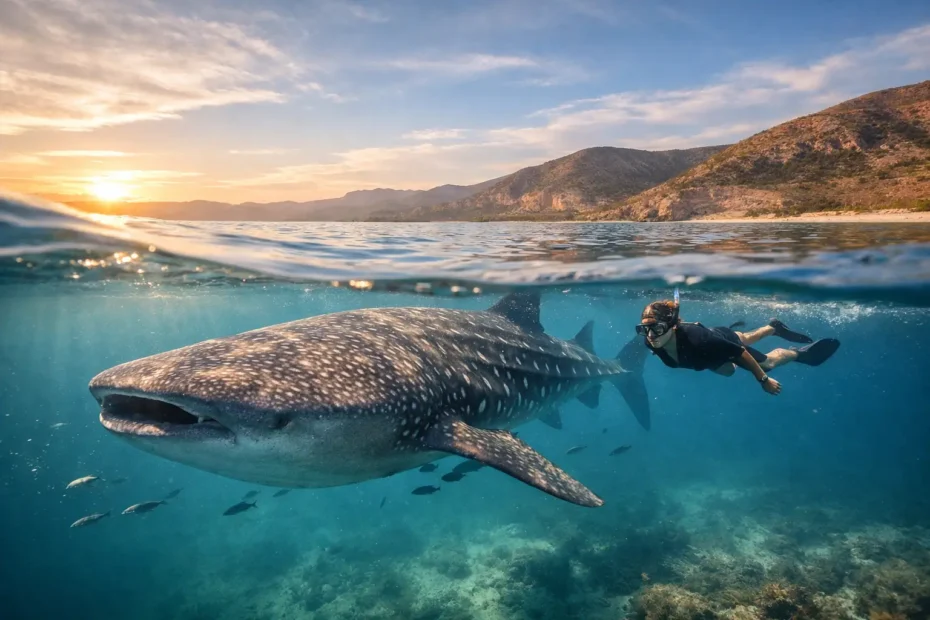
The question behind every search for the best time whale sharks La Paz can deliver is really this: when can I float beside one of the ocean’s great gentle giants and still enjoy the trip? In La Paz, that answer is usually late fall through early spring. But the best month for you depends on whether you want warmer water, the strongest chance of sightings, quieter travel dates, or a full Baja California Sur escape built around the encounter.
Whale sharks are wild animals, not an attraction on a timetable. Their presence in the Bay of La Paz follows food, water conditions, and nature’s own shifting calendar. That is part of what makes a respectful swim with them feel so extraordinary. With the right timing, a reliable operator, and a little flexibility, this can be the moment that stays with you long after the sand has left your suitcase.
Best Time for Whale Sharks in La Paz
La Paz whale shark season generally runs from October through April, with the most dependable window often falling between November and February. During these months, juvenile whale sharks frequently gather in the protected waters near the city, feeding near the surface and giving visitors a remarkable opportunity to observe and swim alongside them under carefully managed conditions.
For many travelers, December through February is the sweet spot. Sightings are often more consistent, daytime temperatures are comfortable, and the city has a lively but relaxed winter-season energy. It is an excellent choice for couples, families with older children, and travelers who want to combine whale sharks with La Paz’s food scene, island excursions, and a few unhurried days by the sea.
The trade-off is water temperature. Winter water can feel brisk, especially if you tend to get cold easily. A good wetsuit changes the experience completely, and a professional crew will help you choose the right fit. You are not there to prove anything by shivering in a thin swimsuit. You are there to enjoy the animal, the water, and the story you will tell for years.
October and November: Warm Water, Early-Season Energy
October and early November can be wonderful for guests who prioritize warmer water and a more summery Baja feeling. The sea is usually more comfortable for swimming, and the weather can be beautifully bright. This is also a smart period for combining a whale shark outing with snorkeling, diving, beach time, or a private cruise.
The consideration is that early-season whale shark numbers can vary more from week to week. Some years begin with excellent encounters; other years take a little longer to settle into a regular pattern. If the whale sharks are the single non-negotiable purpose of your trip, I would generally steer you toward the more established winter window. If you are planning a broader marine adventure and would be delighted to see whale sharks if conditions line up, October can be a very appealing choice.
November often offers a lovely middle ground. The water has not yet reached its coldest point, the desert heat is easing, and La Paz feels less rushed than the holiday period. It is one of those Baja months that experienced travelers quietly love.
December Through February: The Strongest All-Around Choice
If someone asks me for one simple recommendation, I usually say January. It sits comfortably in the core season, whale shark opportunities are often strong, and the mild winter climate makes being out on the water a pleasure. Expect cooler mornings, sunny afternoons, and water that may call for a wetsuit.
December is festive and popular, particularly around Christmas and New Year’s. It is a beautiful time to be in Baja Sur, but premium hotels, private boats, and the best small-group departures can book well ahead. January and February can offer a little more breathing room once the holiday rush has passed, though they are still high-demand months for travelers seeking marine wildlife.
February also gives you an appealing reason to extend your itinerary beyond La Paz. It is prime time for gray whale experiences farther north around Magdalena Bay, while whale sharks may still be available in La Paz. Combining two completely different whale encounters in one Baja trip is the sort of thing that makes people look at each other over dinner and say, “Did we really do all that?”
March and April: A Good Option With More Variability
Whale sharks can remain in La Paz into March and sometimes April, but this is the portion of the season where flexibility matters most. Water temperatures begin to rise, days feel warmer, and spring travel can be less crowded than the winter peak. For guests who dislike colder water, that is a meaningful advantage.
Still, the later you travel, the less I would build the entire vacation around one specific whale shark date. A well-designed itinerary gives you excellent alternatives: a sea lion snorkel at Espíritu Santo, a private beach day, scuba diving, a local food experience, or time in the desert landscapes that make Baja Sur so much more than a beach destination.
That is the advantage of planning with local knowledge rather than booking one isolated boat ride and hoping for magic. A great trip has a Plan B that still feels like Plan A.
What a Responsible Whale Shark Swim Looks Like
La Paz’s whale shark area is protected, and access is regulated to reduce pressure on the animals. Authorized boats, licensed guides, group-size limits, designated viewing procedures, and respectful swimming distances all matter. The rules can change with daily conditions and official management decisions, so a responsible operator will never promise an encounter before checking the latest status.
A good experience is not about chasing an animal at full speed or crowding it for a photo. It is about entering the water calmly, letting the whale shark set the pace, and watching its enormous spotted body move through blue-green water with quiet purpose. You will be asked not to touch the shark, block its path, or use flash photography. Those are not inconveniences. They are the reason this experience can remain special for the next visitors and, more importantly, for the sharks themselves.
Morning departures are often preferable because the bay can be calmer early in the day. However, nature likes to keep guides humble. Wind, visibility, currents, and animal behavior shape every outing. Even in peak season, no ethical captain should guarantee wildlife on command.
How Long to Stay in La Paz
For travelers making a special trip for whale sharks, I recommend staying at least three nights, with enough room for two possible water days. That approach gives you weather flexibility and removes the pressure from a single fixed departure. It also gives you time to enjoy La Paz properly rather than treating it as a quick stop between airports.
A four- or five-night stay is even better if you want to add Espíritu Santo Island, sea lions, diving, a private yacht day, or simply a slow evening on the malecón after a day on the sea. Travelers often underestimate how much they will appreciate a recovery day after swimming, boating, sun, and salty air. Baja rewards a little space in the schedule.
If you are arriving from the United States, the logistics are usually easiest through La Paz or Los Cabos, depending on your flights and the rest of your itinerary. Ground transportation, boat quality, timing, wetsuits, seasickness considerations, and hotel location all influence how relaxed the day feels. Those details are where a polished wildlife experience becomes a worry-free vacation.
The Best Month Depends on Your Travel Style
Choose November if warmer water and shoulder-season ease matter most. Choose December through February if you want the strongest overall chance of whale shark activity and do not mind a wetsuit. Choose March if you prefer warmer spring weather and can keep your plans flexible.
For photographers, calm mornings and a small, respectful group are often more valuable than chasing the busiest dates. For families, the key is choosing a boat and crew that understand pacing, safety, and how to make children feel comfortable before anyone steps into open water. For divers and serious ocean lovers, whale sharks can become one highlight in a longer Baja marine itinerary that includes sea lions, reefs, wrecks, and seasonal whale watching.
The smartest plan is to give yourself a few days, travel with an operator that puts the animals first, and leave room for Baja to surprise you. At Sunny Adventure Travel, that is exactly how I like to build a whale shark experience: with trusted crews, thoughtful timing, and a backup plan so good you will be happy either way. Then, when that wide spotted back appears beneath the surface, you can simply put on your mask, take a breath, and be present for it.