


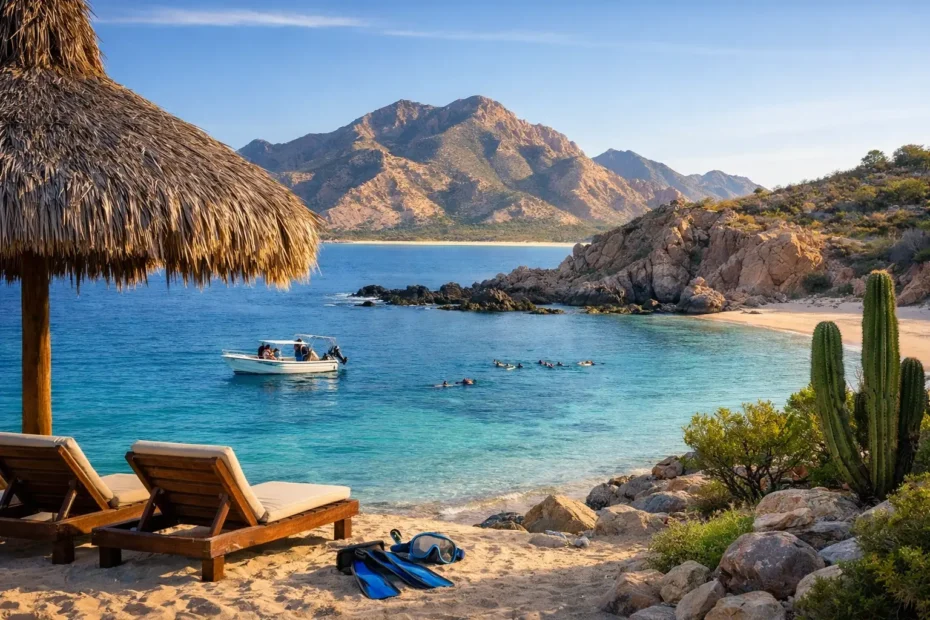
Cabo Pulmo is not the Baja destination for rushing from breakfast to a crowded beach club. It is a small, wonderfully remote coastal community where the desert meets one of North America’s most remarkable living reefs. This Cabo Pulmo travel guide is for travelers who want the real reward: clear water, quiet mornings, sea turtle sightings, and the kind of ocean time that stays with you long after you fly home.
The trade-off is part of the magic. Cabo Pulmo has fewer conveniences, a slower pace, and limited services compared with Cabo San Lucas or San José del Cabo. Come prepared, give yourself time, and let the place be exactly what it is – wild, intimate, and gloriously uncrowded.
Why Cabo Pulmo Feels Different
Cabo Pulmo National Park protects a coral reef that has made an extraordinary recovery over the past several decades. When you slip below the surface here, you are not entering a decorative aquarium. You are visiting a working marine ecosystem: schools of jacks moving like a silver tornado, rays gliding over sand, reef fish flickering through the coral, and, in the right season, larger pelagic visitors passing through the blue.
Above water, the village remains refreshingly low-key. Dirt roads, modest local restaurants, beachfront casitas, and wide-open stars set the tone. This is a destination for couples who want privacy with purpose, families ready to trade amusement parks for nature, and divers who understand that a healthy reef is the real luxury.
It is also an excellent complement to a more polished Baja Sur itinerary. A few days in Cabo Pulmo can balance resort comfort in Los Cabos or La Paz with something more personal and elemental.
When to Go to Cabo Pulmo
There is no single perfect month. The best timing depends on whether you prioritize water temperature, visibility, marine life, or comfortable weather on land.
From late fall through spring, days are generally pleasant and dry, while the water is cooler. This is a lovely period for hiking, beach walks, and travelers who prefer milder daytime temperatures. Divers should plan for appropriate thermal protection, especially in winter.
Late summer and early fall usually bring the warmest water, often with bath-like conditions that snorkelers adore. This can be an exciting time for richer marine encounters, but it is also hurricane season in Baja California Sur. Weather, road conditions, and boat departures can change quickly. Flexible plans and a guide who is watching local conditions are worth their weight in sunscreen.
For many visitors, May, June, October, and November offer a sweet spot. Expect fewer weather extremes, comfortable ocean time, and a calmer overall rhythm. If your schedule allows, choose your dates around the experience you want rather than assuming every Baja beach destination behaves the same way.
Getting There Without Turning the Drive Into an Adventure Story
Cabo Pulmo is reachable from Los Cabos International Airport and from La Paz, but the final approach is part of the journey. Depending on your route and current road conditions, expect a drive of roughly two to three hours from the airport area. Portions of the road may be unpaved, uneven, or affected by recent rain.
A standard rental car can sometimes manage the trip in dry conditions, but that does not automatically make it the best choice. If you are arriving after dark, traveling with young children, carrying dive gear, or simply do not want the first day of vacation to involve navigation debates, private transportation is the calmer option.
I always recommend arriving with water, snacks, cash, and a charged phone, while remembering that cell service can be patchy. Do not depend on Cabo Pulmo for big grocery runs, pharmacies, or a late-night change of plans. Stock up before heading east, then enjoy the freedom that comes from being properly prepared.
Where to Stay: Choose Atmosphere Over Amenities
Cabo Pulmo accommodations tend to be small-scale: private homes, casitas, simple inns, and a handful of intimate eco-minded stays. You will find character and proximity to nature, not sprawling resorts with multiple pools and round-the-clock room service.
For a romantic trip, a private casita with a sea view can be spectacular. For families or friend groups, a home with a kitchen is often the smarter choice because dining options are limited and schedules revolve around ocean activities. If air conditioning, reliable Wi-Fi, or direct beachfront access matters to you, confirm it specifically before booking. In a remote village, details that sound minor on a listing can shape the entire stay.
Book early during popular travel periods. Cabo Pulmo is small by design, and the best places are not interchangeable.
Diving and Snorkeling in Cabo Pulmo National Park
The protected waters are the reason most people make the journey. Diving is exceptional for certified divers, particularly those who appreciate abundant marine life, dramatic schools of fish, and the privilege of visiting a reef protected by the local community.
Snorkeling can also be rewarding, though it depends on sea conditions, your comfort in open water, and where your operator can safely take you that day. Do not promise yourself a particular animal encounter. The sea is not a theme park, and that unpredictability is part of what makes a good day on the water feel so extraordinary.
Choose a permitted, safety-conscious operator with well-maintained equipment and captains who know the conditions. This is not the place to pick the cheapest boat and hope for the best. Ask about group size, shade, ladder access, flotation support, marine park fees, and what happens if weather cancels the outing.
If you are prone to seasickness, treat it seriously before boarding. Take your preferred preventative medication as directed, eat a light breakfast, hydrate, and tell the crew. A little preparation can save a beautiful day.
Marine Park Etiquette Matters Here
Cabo Pulmo’s success is a conservation story, and visitors have a role in protecting it. Avoid touching coral, chasing wildlife, standing on the reef, or feeding fish. Use reef-conscious sun protection when possible, secure loose items, and follow your guide’s instructions even when the water looks calm.
The best operators do more than show you beautiful places. They help you understand why those places are still beautiful.
What to Do When You Are Not in the Water
A good Cabo Pulmo itinerary leaves room for doing less. Spend an unhurried morning on the beach, watch frigatebirds circle overhead, or take a slow walk where the desert meets the shoreline. The light in Baja has a way of making even a simple drive feel cinematic.
For active travelers, the surrounding East Cape offers hiking, mountain biking, and scenic drives, though heat and road conditions deserve respect. Bring more water than you think you need and avoid setting out in the hottest part of the afternoon. This is a desert, not a resort promenade.
Food is another quiet pleasure. The village’s small restaurants can serve wonderfully fresh seafood and traditional Baja flavors, but opening hours and menu availability can vary. That is not poor service. It is simply the rhythm of a small community far from a city supply chain. Go with patience, order a cold drink, and enjoy the fact that nobody is trying to rush you out the door.
A Smart Three-Night Cabo Pulmo Plan
For most first-time visitors, three nights is the minimum that makes the drive worthwhile. Arrive in daylight, settle in, and keep your first evening easy. On your first full day, plan your dive or snorkel excursion while you are rested and flexible. Use the next day for a second ocean outing if conditions are good, or enjoy a beach day and a short exploration of the East Cape.
A fourth or fifth night makes sense for dedicated divers, photographers, or travelers who truly want to decompress. It may not be the right choice if you need nightlife, shopping, or a packed menu of daily excursions. Cabo Pulmo rewards people who can slow down.
For travelers who want this remarkable stop woven into a larger Baja Sur journey, Sunny Adventure Travel can help coordinate the right vehicle, accommodations, trusted marine operators, and pacing. I personally believe your vacation should feel exciting, not like a logistics exam.
The Small Details That Make the Trip Better
Bring cash in Mexican pesos, especially for smaller purchases and tips. Pack a reusable water bottle, sun shirt, hat, dry bag, sandals that handle sand and uneven ground, and a light layer for cool evenings. If you dive, bring certification cards and let your operator know about your recent diving history and equipment needs before arrival.
Most of all, leave space in the schedule. Cabo Pulmo is not a place to conquer with a checklist. It is a place to arrive prepared, pay attention, and let a healthy reef, a quiet beach, and a Baja sunset do what they have always done best: remind you how good it feels to be far from the ordinary.