


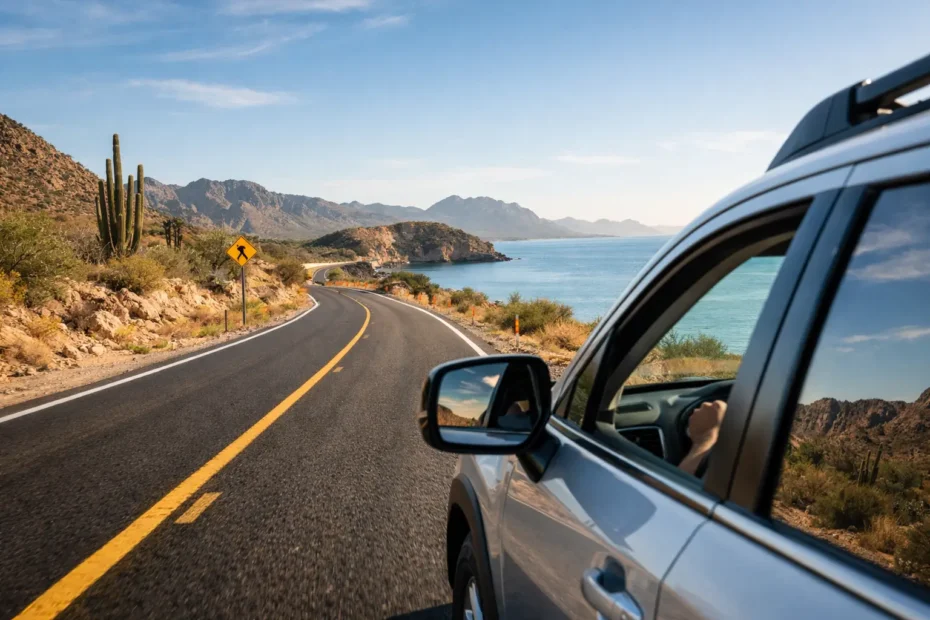
The first stretch of highway out of Los Cabos can feel wonderfully simple: sun overhead, desert on both sides, and the Sea of Cortez waiting somewhere beyond the hills. But Baja road safety is not about being fearful or overprepared. It is about understanding that Baja California Sur rewards travelers who slow down, plan ahead, and respect a landscape that still plays by its own rules.
I have guided travelers through this peninsula for years, from polished resort arrivals to wild, beautiful corners where the road turns to sand and the stars take over. Most visitors have a fantastic experience driving here. The avoidable problems tend to come from rushing after dark, trusting an empty fuel gauge too long, or treating Highway 1 like an American interstate. A little local awareness changes the whole trip.
Baja Road Safety Starts Before You Leave the Airport
Choose the vehicle for the trip you are actually taking, not the trip you imagine in a vacation mood. For a stay between Los Cabos, La Paz, Todos Santos, and the main paved routes, a reliable standard rental car is usually enough. If your plans include remote beaches, sandy access roads, mountain villages, or a surf camp far from pavement, a suitable SUV may be the smarter choice. Four-wheel drive helps in some places, but it does not make deep sand, washouts, or unfamiliar backroads risk-free.
Before accepting a rental car, walk around it with an agent and photograph every existing mark, tire, windshield chip, and wheel scrape. Check that the spare tire and jack are present. Ask where roadside assistance applies, whether driving on unpaved roads is permitted, and what the insurance policy actually covers. This is not glamorous vacation planning, but it is a fine moment to be fussy.
Mexican liability insurance is essential, and many credit card protections do not replace it. Coverage requirements and rental policies vary, so read the agreement rather than relying on a quick reassurance at the counter. If you are traveling with a group, confirm who is authorized to drive. A friend taking the wheel for 20 minutes can become an expensive complication if they are not listed.
A practical departure check takes only a few minutes:
- Save your hotel, restaurant, marina, and planned stops in offline maps before leaving reliable Wi-Fi.
- Carry drinking water, sunscreen, a phone charger, and a small amount of Mexican pesos.
- Fill up earlier than feels necessary, especially before a long transfer or a day outside major towns.
- Tell someone at your hotel or within your group where you are headed if you are exploring a remote beach.
- Look at the weather, particularly during the summer rainy season and any period of tropical storm activity.
Highway Driving in Baja Sur Requires Patience
Highway 1 is the spine of Baja California Sur, connecting Cabo San Lucas and San José del Cabo with Todos Santos, La Paz, Loreto, and destinations farther north. Much of it is paved and very manageable, but it is generally a two-lane road. That means passing requires judgment, not optimism.
Use signals early, stay in your lane, and do not feel pressured by a faster local driver behind you. When it is safe, ease to the right and let them pass. Do not accelerate on a passing vehicle, and never cross a solid line just because the view ahead looks clear. Hills, curves, dips, and oncoming traffic can change that view in a heartbeat.
Watch for topes, Mexico’s famously effective speed bumps. They appear near towns, schools, intersections, and pedestrian areas, sometimes with warning signs and sometimes with very little fanfare. Slow down whenever you enter a community. A hard hit can damage a rental car, but more importantly, these are places where people, dogs, bicycles, and local traffic belong on the road.
Construction zones deserve extra care. Road improvements are common, and a familiar route may be narrowed, redirected, or reduced to loose gravel. Follow signs and the direction of traffic crews. After rain, also expect puddling, mud, debris, and occasional washouts near arroyos. The desert absorbs water dramatically, and a dry-looking route can change quickly during a storm.
Why Night Driving Is the Biggest Avoidable Risk
If I could offer one piece of Baja road safety advice to independent travelers, it would be this: plan to arrive before dark whenever possible. Night driving is not automatically dangerous, but the variables increase sharply. Cattle, horses, goats, dogs, and wildlife may wander onto the road. Shoulders can be narrow or uneven. Street lighting is limited outside towns, and a missed turn feels more complicated when there is no cell signal and no obvious place to pull over.
This matters especially after a long flight or an active day on the water. A margarita at sunset, a late dinner in Todos Santos, or a tired drive back from a hidden beach can turn a relaxed day into a poor decision. Design the itinerary so no one has to push through fatigue. Stay nearby, arrange transportation, or make the night part of the adventure rather than a race against the clock.
For couples and families, this is one of the strongest arguments for a private driver on selected days. You do not need one for every mile of the trip. But for airport arrivals, dinner evenings, multi-stop sightseeing, or a one-way transfer after a boat day, having a professional local driver removes the pressure. You can look out the window, enjoy the moment, and arrive with your energy intact.
Fuel, Navigation, and the Joy of a Plan B
Gas stations are dependable in major towns and along principal routes, but do not treat Baja Sur like a place where the next station is always five minutes away. Fill up when you are around half a tank before heading into a less populated area. Keep cash available, since small tips and occasional payment limitations can make pesos useful even when cards work elsewhere.
At the pump, make sure it begins at zero and keep your receipt. This is a normal habit, not a reason to be suspicious. Most fuel stops are straightforward, and attendants often provide helpful service. A small tip for assistance with windshield cleaning or checking tires is appreciated.
Navigation apps are useful, but they are not a substitute for judgment. They may suggest a shortcut that is technically a road but unsuitable for your rental car, your comfort level, or the current conditions. If a route suddenly becomes deeply rutted, sandy, flooded, or isolated enough to make you uneasy, turn around while turning around is still easy. Baja’s best memories are rarely improved by getting stuck 20 miles from help in midday heat.
For remote beach access, ask a knowledgeable local person about current conditions. Tides, sand, seasonal storms, and property access can all affect the route. The right answer may be a different beach, a guided outing, or simply waiting until another day. Flexibility is a traveler’s secret advantage here.
Checkpoints and Everyday Interactions
Military and police checkpoints are a normal part of travel in Baja California Sur. Slow down, follow instructions, remain polite, and have identification and rental documents accessible. These interactions are usually brief. Do not photograph personnel or checkpoint operations unless clearly permitted.
The same calm approach works if you are stopped for a traffic issue. Be respectful, avoid arguing at the roadside, and ask for clear information. Never drive after drinking, and do not assume that a vacation setting changes the rules. It does not.
In towns, park thoughtfully and avoid leaving bags, cameras, passports, or dive gear visible in the car. Most travel inconveniences are ordinary ones: a misplaced phone, an overheated vehicle, a flat tire, or a bag left on a seat. Lock the car, take valuables with you, and keep your passport secured at your accommodation unless you need it.
When Guided Transportation Is the Better Luxury
There is real freedom in a Baja road trip, especially when you have the right route, daylight, and a little curiosity. There is also luxury in letting someone else manage the logistics when the day is meant for whales, diving, a long lunch, or a private beach escape. The best choice depends on your itinerary, confidence behind the wheel, group size, and appetite for spontaneous detours.
At Sunny Adventure Travel, I help guests make that choice honestly. Sometimes I will tell you to rent the car and enjoy the open road. Other times, I will recommend a trusted driver, a private guide, or a planned transfer because it gives you more time to enjoy Baja and less time doing vacation math in a parking lot.
Leave room in your schedule for a slow coffee, an unexpected viewpoint, and the possibility that the desert road is asking you to ease off the accelerator. Baja Sur is at its best when you travel with curiosity, good judgment, and enough daylight left to watch the sea change color.