


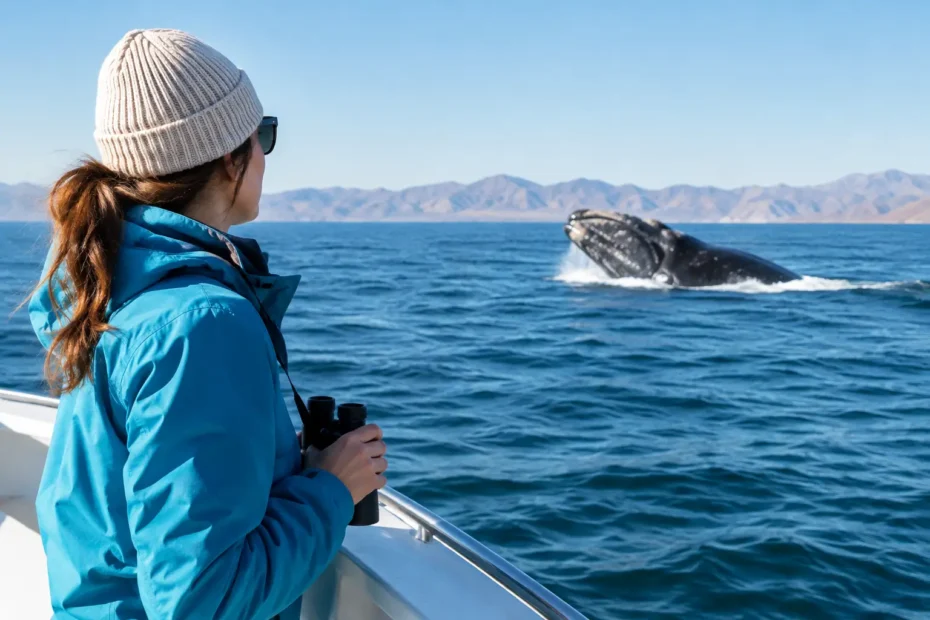
The answer to what to wear whale watching is rarely the swimsuit-and-sandals outfit people picture when they book a Baja trip. The marina may feel warm, even hot, but once the boat picks up speed, the wind changes the conversation quickly. Add sea spray, early starts, and a long spell standing still while a whale surfaces nearby, and comfort becomes part of the experience.
I have seen guests arrive overprepared for a polar expedition and others shivering in a light beach cover-up. The sweet spot is simple: wear breathable layers, protect yourself from sun and wind, and choose footwear that lets you move confidently on a moving deck. You do not need technical expedition gear. You do need a little common sense and a guide who pays attention to the conditions before departure.
What to wear whale watching: start with layers
A light base layer is your starting point. A breathable T-shirt, sun shirt, or lightweight long-sleeve top works well in Baja California Sur, where the sun can be intense even when the air feels cool. Long sleeves have a practical advantage: they reduce sun exposure without requiring you to reapply sunscreen every few minutes.
Over that, bring a fleece, light sweater, or insulated mid-layer. You may not need it at the dock, but you will be glad to have it on an open boat before the sun is high or when the captain heads across a breezier stretch of water. Fleece is an excellent choice because it stays warm even if it catches a little spray and can be tied around your waist once the day warms up.
Your outer layer should block wind. A lightweight waterproof or water-resistant jacket with a hood is usually the most useful item in your bag. It does not have to be bulky. What matters is that it cuts the wind and keeps occasional spray from soaking into your clothes. A hood is especially welcome on fast transits, although a hat with a secure strap often works better when you are actively watching for whales.
For your lower half, comfortable pants, travel pants, leggings, or quick-drying shorts can all work. The right choice depends on the season and your tolerance for cool wind. If you tend to feel cold, choose lightweight long pants rather than denim. Jeans are heavy when wet, slow to dry, and not much fun if you sit on a damp bench. Quick-drying fabrics are kinder to you and to the rest of the day.
Why the weather on land can fool you
La Paz can give you a beautifully sunny morning, then surprise you with a sharp breeze once you leave the protected bay. Whale watching around Bahía Magdalena on the Pacific side can feel cooler still, particularly in the early season and on morning departures. The Sea of Cortez often has warmer air and calmer-looking water, but wind chill on a moving boat is real.
Season matters, but so does the specific route, the boat, the time of day, and the forecast. A private outing can allow more flexibility around departure times and conditions, while a small group needs everyone to prepare for the same range of weather. My advice is always the same: bring one layer more than you think you need. You can remove it. You cannot borrow warmth from the person sitting next to you without making a very awkward new friend.
Choose shoes made for a moving boat
The best shoes for whale watching have non-slip soles, secure straps or laces, and enough coverage to keep your feet comfortable if the deck is wet. Closed-toe water shoes, boat shoes, lightweight sneakers, or well-secured sport sandals are all reasonable choices, depending on the boat and the conditions.
Flip-flops are convenient around hotels and beaches, but they are not ideal for most whale watching trips. They can slide on wet surfaces, offer little protection around equipment, and have a talent for disappearing when you least want to lose a shoe. High heels, leather-soled shoes, and brand-new white sneakers also deserve a peaceful morning on shore.
If you are joining a tour that involves a panga landing, walking through shallow water, or stepping onto a beach, ask in advance whether water shoes make more sense than regular sneakers. This is one of those details that changes from one excursion to another. A good operator will tell you what the actual boarding and landing conditions are, not just hand you a generic packing list.
Sun protection is not optional, even on a cool day
Cool air can hide strong sun. Reflected light from the water reaches places you do not always expect, including under your chin, inside your ears, and along the tops of your legs. Apply reef-conscious sunscreen before boarding, then bring it with you for reapplication. A broad-spectrum formula and SPF 30 or higher are sensible choices for time on the water.
A wide-brimmed hat offers the best coverage, but only if it can stay on your head. Look for a chin strap, adjustable cord, or close-fitting design. A baseball cap is fine if that is what you have, though it leaves your ears and neck exposed. Many guests prefer a lightweight brimmed hat plus sunglasses with a retaining strap.
Polarized sunglasses are worth bringing because they reduce glare and make the surface of the water easier to read. They may even help you spot a fin, a blow, or a splash before someone points it out. Choose a pair you would be disappointed to lose, but not devastated to replace. Saltwater has no respect for expensive eyewear.
Pack a small bag, not a floating closet
Most whale watching boats have limited dry storage, and a crowded deck is not more comfortable because everyone brought three tote bags. Keep your essentials together in a small backpack or dry bag. Your jacket, water, sunscreen, sunglasses, phone protection, and any medication should be easy to reach without rummaging through a suitcase-sized bag.
A waterproof phone pouch is practical for photos and peace of mind. Better still, attach your phone or camera with a wrist strap if you plan to use it near the rail. Whales create unforgettable moments, but a wet phone does not make a great souvenir.
Bring drinking water, even when it is supplied. The sun, wind, and excitement can leave people more dehydrated than they realize. A small snack is useful on longer trips, especially for children or anyone who gets queasy when hungry.
Dress differently if seasickness is a concern
Seasickness is not a fashion issue, but what you wear can make it easier to manage. Tight waistbands, heavy layers you cannot remove, and getting too warm below deck can make you feel worse. Wear comfortable clothing, stay in the fresh air, look toward the horizon, and tell your captain or guide early if you are worried.
If you know you are prone to motion sickness, speak with your doctor or pharmacist before travel about suitable medication. Take any recommended medicine as directed and early enough to work. Ginger candies, acupressure bands, and staying hydrated help some travelers, but they are not substitutes for planning.
On the boat, choose a spot near the center if possible, where motion is generally less pronounced. Do not spend the ride staring at a screen while editing photos. There will be time for that later, preferably with fish tacos and both feet on solid ground.
A practical whale watching outfit for most Baja trips
For many guests, the easiest formula is a breathable long-sleeve shirt, lightweight pants or shorts, a fleece, a windproof jacket, secure non-slip shoes, a strapped hat, and polarized sunglasses. Carry sunscreen, water, and a small dry bag. Then adjust one level warmer for early mornings, Pacific Coast excursions, or winter cold fronts.
Children should follow the same logic, with an extra layer available because they often get cold sooner while sitting and watching. For private family trips, it is especially helpful to share each traveler’s age, comfort level, and any mobility or motion-sickness concerns beforehand. Small details help shape a more relaxed day for everyone.
Let the conditions set the dress code
The goal is not to look like a catalog model on a boat. It is to stay warm enough to enjoy the first distant blow, dry enough to keep watching when the boat changes direction, and protected enough that the afternoon does not end with a sunburn. Whale watching rewards patience, and comfortable clothing gives you more of it.
At Sunny Adventure Travel, we plan private adventures and small-group expeditions with the real conditions in mind, from the boat and route to the people traveling with you. Contact us to shape a personalized Baja California Sur itinerary around the wildlife encounters you hope to experience. Pack for the breeze, leave room for wonder, and let the ocean set the pace.