


The first time a gray whale rises beside a small boat in a Baja lagoon, the whole group tends to go quiet. Not because anyone told them to, but because a creature the size of a school bus has chosen to look back at them. That is the magic behind Baja California whale watching tours: this is not a distant speck on the horizon. Done in the right place, at the right time, it can feel remarkably personal.
But Baja is a very large peninsula, whale seasons overlap rather than match, and not every tour is built for the same traveler. A comfortable, well-run day on the water begins long before the boat leaves the dock. It starts with choosing the right coastline, species, season, and level of service for your trip.
Why Baja Sur Is One of the World’s Great Whale Destinations
Each winter and spring, the protected Pacific lagoons of Baja become a nursery for gray whales. These whales travel thousands of miles from northern feeding grounds to mate, give birth, and raise young in calmer, warmer water. In some lagoons, curious mothers and calves may approach pangas at their own pace. Nothing should be forced, and no ethical operator promises a touch, but the encounters can be wonderfully close.
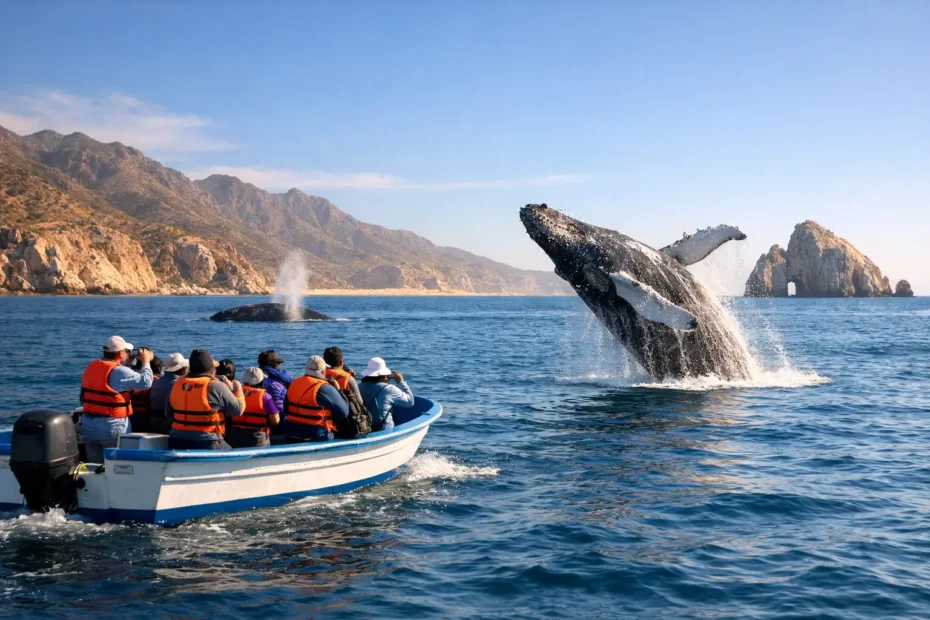
On the Sea of Cortez side, the story changes. Humpback whales pass through waters near Cabo San Lucas and La Paz, often providing those classic breaches, tail slaps, and powerful surface displays. Farther north around Loreto, blue whales may be seen in season. Seeing the largest animal ever to live on Earth surface in a calm, glassy sea is a memory that tends to rearrange a person’s sense of scale.
The trade-off is simple: no single destination reliably delivers every species on every day. Baja rewards travelers who plan around nature rather than trying to squeeze nature into a fixed wish list.
When to Book Baja California Whale Watching Tours
For gray whales, January through March is generally the heart of the season. February is often a favorite for travelers because the lagoons are active with mothers and calves, though conditions and whale behavior always vary. The major gray whale areas include Magdalena Bay on the Pacific side of Baja California Sur, as well as San Ignacio Lagoon and Guerrero Negro farther north.
Magdalena Bay is often the most practical choice for guests based in or traveling through La Paz and southern Baja Sur. It can work beautifully as part of a broader itinerary with sea lions, island snorkeling, excellent local food, and relaxed beach time. San Ignacio offers a more remote, immersive lagoon experience that appeals to travelers who want the wild setting to be part of the story, not just a day trip.
Humpback whale season near Los Cabos and La Paz is typically strongest from December into April. If your dream is watching a whale launch clear of the water with the Baja desert in the background, this is your window. Humpbacks can be thrillingly visible, but they cover a lot of ground. Some outings bring repeated displays; other days offer quieter sightings. That uncertainty is part of real wildlife travel.
Blue whale sightings around Loreto are most often associated with late winter and early spring, commonly January through March. These trips are best for patient observers. Blue whales do not perform for the boat. They surface, breathe, glide, and disappear with astonishing calm. A good guide helps you appreciate what you are seeing rather than chasing a dramatic moment that may never come.
Choose the trip by your priority
If close, gentle encounters are at the top of your list, plan around gray whales and the Pacific lagoons. If you want a luxury resort base, dramatic scenery, and the possibility of acrobatic behavior, humpback tours from Cabo or La Paz may fit better. If your travel style leans toward natural history, quieter waters, and a true once-in-a-lifetime species, consider building time around Loreto’s blue whale season.
For families, couples, and first-time visitors to Mexico, I usually recommend avoiding overpacked schedules. A whale trip is far more enjoyable when you are not arriving exhausted from a long transfer or rushing immediately to the airport afterward. Give the experience room to breathe.
What a Well-Planned Whale Day Feels Like
The best outings have a rhythm to them. You are collected or meet at a clear departure point, introduced to a captain and guide who know the local conditions, fitted with proper safety equipment, and given an honest briefing before departure. That briefing should cover weather, ride time, restroom realities, photography expectations, and how the crew will approach whales without crowding them.
In a Pacific lagoon, the boats are usually open pangas. They are simple, capable vessels designed for local conditions, but they are not luxury yachts. The ride can be chilly in the morning, bright by midday, and bouncy if wind picks up. Dress in layers, bring sun protection, and keep a dry layer handy even on a warm-looking day.
Off Cabo, La Paz, or Loreto, vessels range from smaller pangas to larger day boats. Bigger is not automatically better. A larger boat may provide more shade, space, and stability, while a smaller vessel can feel more intimate and maneuverable. The right choice depends on your group, the sea state, mobility needs, and how much time you are comfortable spending underway.
This is where local planning makes a meaningful difference. At Sunny Adventure Travel, we match guests with operators based on the actual trip they want, not simply the first boat with an open seat. I personally value captains who understand that a great encounter begins with patience, respect, and good judgment.
Comfort, Seasickness, and the Details People Forget
Let’s be honest: marine wildlife adventures are not always polished. There may be early starts, wind, salt spray, uneven docks, and long stretches of quiet water between sightings. Those are not failures of the experience. They are part of meeting wild animals in their own environment.
A few practical choices can transform the day. Eat a light breakfast rather than going out on an empty stomach. If you are prone to motion sickness, use your preferred remedy before boarding, not after you feel unwell. Choose a seat near the center of the boat when possible, look toward the horizon, and let the crew know if you need help. Experienced crews have seen it all, and there is no prize for pretending you feel fine.
Bring a wind layer, polarized sunglasses, reef-safe sunscreen, a secure hat, and a camera strap. Do not bring anything you would hate to see splashed or dropped. Phones should be protected in a waterproof pouch, and expensive cameras deserve a dry bag. Most importantly, put the camera down occasionally. The best moment may happen while you are trying to adjust a lens.
Responsible Whale Watching Is the Only Kind Worth Doing
A close whale encounter should always happen on the whale’s terms. Responsible captains maintain appropriate distance, reduce speed around animals, avoid separating mothers and calves, and move away when whales show signs of discomfort. In regulated lagoon areas, local rules may limit permits, routes, boat numbers, and interaction practices. Those standards protect the animals and preserve the experience for future travelers.
Be cautious with operators who guarantee touching a whale, promise a particular species, or market wildlife as a performance. Whales are not attractions on a schedule. A reputable crew will be excited when an animal approaches but equally respectful when it does not.
The same principle applies to swimming. Swimming with whales is not a casual add-on, and it is not appropriate in every location or with every species. If a special marine encounter is on your wish list, ask what is legal, safe, seasonal, and genuinely low impact before you build the itinerary around it.
Build the Whale Experience Into a Better Baja Trip
Whale watching is extraordinary on its own, yet it becomes even richer when paired with the landscapes that make Baja Sur so distinctive. In La Paz, a whale day can sit alongside a visit to Espíritu Santo Island, snorkeling with sea lions, and a long seafood lunch by the malecón. In Loreto, it can be part of a slower escape shaped by quiet islands, desert mountains, and the calm blue-green Sea of Cortez.
For travelers heading to the Pacific lagoons, the journey itself is part of the reward. Open desert roads, salt flats, birdlife, small towns, and huge skies make the destination feel earned. Private transportation and thoughtfully timed overnight stops can turn what might feel like a complicated transfer into a beautiful part of the adventure.
If you are traveling for a honeymoon, milestone birthday, or private family getaway, consider reserving a private boat. It offers more flexibility with pace, photographs, children, and personal space. A shared departure can be excellent for sociable travelers and often costs less, but it requires everyone to follow the same schedule. Neither is universally better. It depends on the experience you want to remember.
When you stand on a boat in Baja and hear that first whale exhale roll across the water, the logistics fade fast. Plan wisely, choose people who respect the sea, and leave enough space in your itinerary for wonder to take its time.