


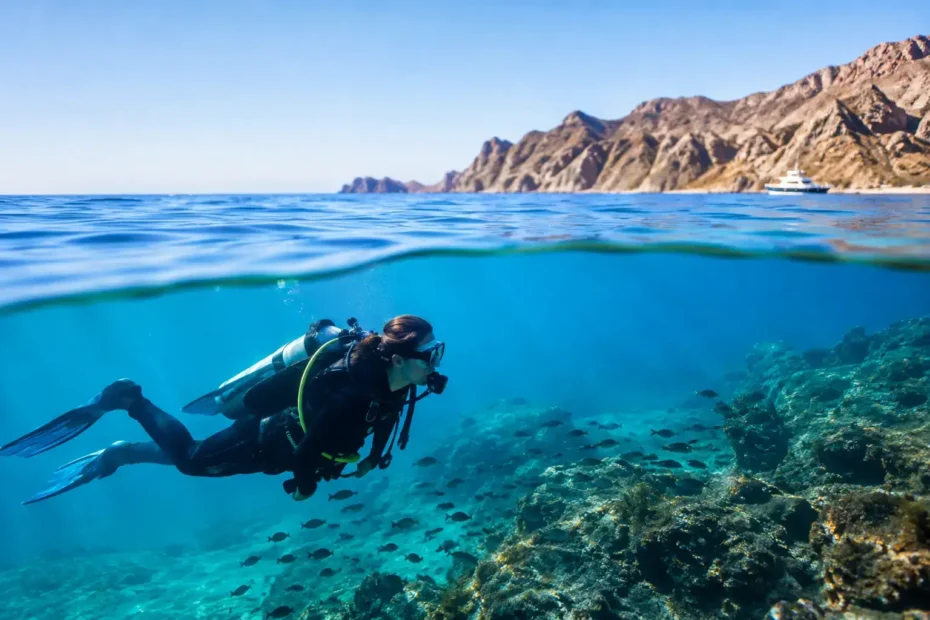
The first question I hear from visiting divers is usually, “When is the best time?” The honest answer is that Baja diving conditions change dramatically with the season, the coastline, and even the time of day. A warm, glassy morning near La Paz can be followed by a lively afternoon wind. Two hours away, Cabo Pulmo may offer a completely different sea state, temperature, and underwater experience.
That variety is precisely what makes Baja California Sur so rewarding. You can plan for playful sea lions, whale sharks, schooling jacks, mobula rays, reefs, seamounts, and blue-water encounters, but the best trip starts by matching your expectations and experience level to the conditions rather than chasing a single “perfect” month.
Baja Diving Conditions: The Big Picture
Baja California Sur sits between two distinct bodies of water. The Sea of Cortez, along the east side of the peninsula, is generally the easier and more protected choice for many divers. It includes La Paz, Isla Espíritu Santo, La Ventana, Los Barriles, and Cabo Pulmo. The Pacific side is wilder, cooler, and more exposed, with extraordinary seasonal wildlife but more frequent swell and wind.
Within the Sea of Cortez, local geography matters. Isla Espíritu Santo often provides shelter behind its islands and coves, making it an excellent option when open-water conditions are less inviting. Cabo Pulmo is farther south and has a beautiful reef system, but boat routes and surface conditions can depend heavily on the wind. La Ventana is famous for wind sports for a reason: when the afternoon breeze arrives, a calm boat ride is no longer a promise.
Visibility can range from roughly 30 feet after a weather event or plankton bloom to 80 feet or more on a clear day. Water movement, recent wind, rainfall, tides, and seasonal productivity all play a role. Good visibility is wonderful, of course, but a slightly greener sea can also mean the food chain is active and marine life is abundant.
Water Temperature and What to Wear
Water temperature is one of the most practical parts of planning Baja diving. It affects comfort, air consumption, exposure protection, and how much you enjoy that second or third dive.
From December through March, Sea of Cortez temperatures commonly sit in the upper 60s to low 70s Fahrenheit. Many visitors are comfortable in a 5 mm or 7 mm wetsuit, depending on personal tolerance and the number of dives planned. A hooded vest can make a real difference for anyone who gets cold easily. Do not underestimate winter water simply because Baja is sunny above the surface.
Spring brings gradual warming, often into the low to mid-70s. By late spring and early summer, conditions can feel very pleasant in a 3 mm to 5 mm suit. Summer and early fall are the warm-water months, with temperatures often in the upper 70s to mid-80s. A 3 mm suit is enough for many divers then, although sun protection becomes just as important as thermal protection.
Late summer and fall can be wonderfully warm, but this is also the period when tropical weather deserves close attention. A storm system can affect visibility, harbor operations, and boat schedules. Flexibility is not an inconvenience here – it is smart travel. A well-planned itinerary leaves room to shift a dive day, choose a more protected site, or enjoy an excellent land-based experience when the sea needs a pause.
Winter: Clearer Water and Big Wildlife Seasons
Winter is a favorite for travelers who prefer cooler water, comfortable desert temperatures, and fewer hot-weather crowds. In La Paz, this is also the primary season associated with whale shark encounters, typically from fall into spring, subject to local rules, daily conditions, and regulated access. Snorkeling is generally the way to meet these gentle giants, and it is an activity that divers and non-divers can enjoy together.
Sea lion colonies around Isla Espíritu Santo remain a highlight throughout much of the year. Young sea lions are especially curious in the fall and winter months, though their behavior is always on their terms. They may race past your mask, twist around a rock, and disappear just as you reach for the camera. That is part of their charm.
The trade-off is wind. Northerly winds can build during winter, particularly in exposed areas of the Sea of Cortez. Morning departures are often the best choice, and experienced local captains watch forecasts, island shelter, and the comfort level of every guest rather than treating an itinerary as unchangeable.
Spring: Active Seas and Changing Conditions
Spring is a transition season. The water begins warming, marine activity increases, and the landscapes are often at their most beautiful after winter moisture. It can be a fine time for divers who appreciate variety and do not mind a little unpredictability.
For ocean safaris near La Ventana and El Sargento, spring can bring exciting chances to encounter mobula rays and other pelagic life. These are not aquarium-style experiences with a guaranteed script. Wildlife movement changes from day to day, and responsible operators never crowd animals or force an encounter. The reward for patience can be spectacular: a line of rays gliding beneath a panga, dolphins riding the bow, or a sudden flash of silver in deep blue water.
Spring wind can be a factor, especially later in the day. For couples or families mixing snorkeling, beach time, and diving, I usually prefer to build the schedule around early boat excursions and leave afternoons for a long lunch, a hidden beach, or a relaxed drive through the region.
Summer and Fall: Warm Water, Reefs, and Pelagic Possibilities
If warm water is your priority, July through October is often the sweet spot. These months can bring tropical visibility, bath-like temperatures, and energetic marine life. Cabo Pulmo is particularly appealing for divers who want reef structure, dense schools of fish, and the possibility of larger visitors in the blue.
Cabo Pulmo National Park is not a destination for racing through a checklist. Its protected reef has developed over decades, and the best dives are often about slowing down: watching swirling jacks, looking closely at reef fish, and appreciating how much life a healthy marine reserve can hold. Conditions are often inviting in summer and fall, but surface chop and weather still determine the final plan.
More experienced divers may also be interested in offshore sites near La Paz, including seamount-style dives where current and depth can be part of the experience. These locations may offer encounters with large schools, rays, and, in the right season, hammerhead sharks. They are not suitable for every diver. Strong current, blue-water descents, and changing surface conditions require sound buoyancy, calm awareness, and a guide who is willing to say no when the day is not right.
How Wind, Current, and Visibility Affect Your Day
A weather app gives useful information, but it does not tell the whole story. Wind direction matters more than wind speed alone. A moderate breeze from one direction may leave a specific bay calm, while the same speed from another direction can create uncomfortable chop on the route home.
Current is equally site-specific. Some reef and seamount dives are at their best when water movement brings nutrients and fish. For newer divers, however, a gentle, shallow sea lion site may be far more enjoyable than an advanced drift. There is no prize for choosing the toughest dive. The right dive is the one that leaves you relaxed, curious, and eager to get back in the water.
For that reason, I recommend sharing your real experience level before the trip, including your recent diving, comfort in current, and whether you tend to get cold or seasick. There is no judgment in this conversation. It simply helps us choose the right boat, the right route, and the right pace.
Planning a Better Baja Dive Trip
A fixed one-day dive booking can work when conditions are ideal, but a multi-day private itinerary offers more room to make good decisions. If wind affects an island crossing, we can shift to a protected bay. If the ocean is superb, we can stay longer. If one member of your party does not dive, the day can still include snorkeling, wildlife watching, beaches, local food, or a quiet coastal escape.
Bring a certification card, dive log or digital record, and any personal equipment that makes you more comfortable, such as your own mask or prescription lenses. Rental gear is widely available, but fit matters. A leaking mask or a wetsuit that is too thin can turn a beautiful dive into an unnecessarily long one.
After more than 10,000 dives, I still believe the best conditions are not merely calm water and perfect visibility. They are the conditions that suit the people on the boat. At Sunny Adventure Travel, I personally help shape private adventures and small-group expeditions around your interests, confidence, and the sea on the day.
If Baja is calling you, contact Sunny Adventure Travel to plan a personalized diving itinerary with enough flexibility for the ocean to show you its best side.