


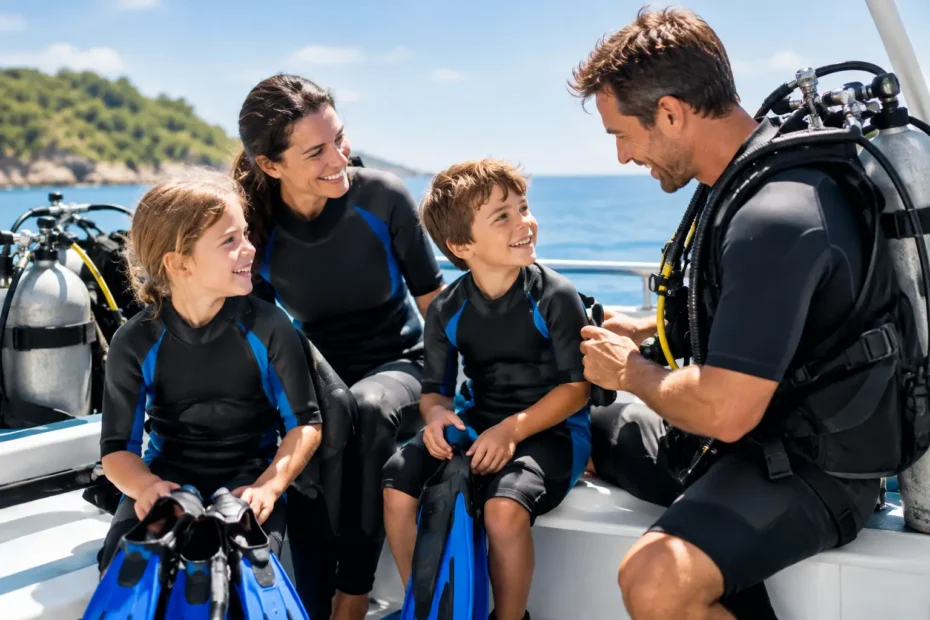
A child’s first glimpse of a sea lion twisting through clear blue water can become the story they tell for years. But to find family friendly dive trips, start with a different question than “Where is the best diving?” Ask: “Will every person in our family feel comfortable, included, and well cared for?” The answer depends as much on the boat, timing, guide, and pace as it does on the reef.
For families traveling to Baja California Sur, the Sea of Cortez offers an unusually rewarding mix of warm-water snorkeling, beginner-friendly diving conditions in the right season, dramatic wildlife, and easy opportunities for non-divers. Still, the sea deserves respect. A well-planned family day should never feel like a rushed checklist of underwater attractions.
What Makes a Dive Trip Truly Family Friendly?
“Family friendly” is often used too loosely. It should not simply mean that children are allowed aboard. A genuinely family-ready dive excursion considers the ages, confidence, swimming ability, energy level, and interests of everyone in the group, including the person who is perfectly happy staying dry.
A good operator begins by understanding your family rather than handing you a fixed schedule. A certified teen diver may be ready for a two-tank morning. A first-time snorkeler may prefer a sheltered cove, a patient briefing, and time to adjust to a mask before meeting the fish. Younger children may enjoy a short boat ride, a beach stop, and watching sea lions from the deck more than a long offshore crossing.
The practical details matter. Look for boats with shade, a stable boarding setup, drinking water, a clean restroom when possible, and enough room to avoid feeling crowded. Ask how long the ride will be, whether sea conditions can change during the day, and what happens if someone becomes seasick or decides not to enter the water. These questions are not fussy. They are how experienced travelers protect a vacation from unnecessary stress.
How to Find Family Friendly Dive Trips That Fit Your Crew
The best trip is rarely the most ambitious itinerary on the brochure. It is the one designed around your actual family. Before choosing a destination or boat, think through a few honest details together: Who is certified to dive? Who is comfortable swimming in open water? Is anyone prone to motion sickness? Does your family enjoy early starts, or would a gentler private day be more enjoyable?
A reputable dive professional will welcome this conversation. They should clearly explain minimum age requirements, certification standards, supervision ratios, weather policies, and the limits of each site. If the answers are vague or dismissive, move on. Good guides do not pressure children or adults to prove themselves in conditions beyond their comfort level.
In Baja, this personalized approach is particularly valuable because conditions and marine life change with the season. A sheltered site around Isla Espíritu Santo may be ideal for relaxed snorkeling and an easy first dive on one day, while wind may make another area less suitable. A local captain who knows the boats, crews, and protected coves can make a smart adjustment before the family has spent an hour bouncing across choppy water.
Match the activity to experience, not enthusiasm
Excitement is wonderful, but it is not a substitute for skills. Children and teens who want to scuba dive must meet the training agency’s age and certification requirements. Even then, their dive plan should be conservative, with shallow depths, simple entries, calm conditions, and close professional supervision.
For many families, snorkeling is the better shared experience. Everyone can enter the same water together, pause when needed, and surface to point out a turtle, school of tropical fish, or playful sea lion. A family can also combine activities: certified divers make a short, appropriate dive while non-divers snorkel with a dedicated guide or enjoy a nearby beach. That structure keeps the day shared rather than splitting the family into separate vacations.
Do not overlook introductory scuba experiences for adults or older teens who are curious but uncertified. These can be memorable when conducted in suitable conditions, with a proper briefing and realistic expectations. They are not a shortcut to becoming a diver, and no one should be pushed underwater because the rest of the group is eager.
Choose private when flexibility matters most
Small-group trips can be excellent when the group is truly small, the schedule is realistic, and the activity level is similar. They can also be a poor fit for a family with young children, mixed swimming abilities, or a grandparent who wants a more comfortable pace.
A private boat or tailor-made day gives your family breathing room. You can leave at a sensible time, choose a route that accounts for sea conditions, spend longer at the snorkel stop everyone loves, or return early without feeling that you have disrupted strangers’ plans. Privacy also makes it easier to manage snacks, sunscreen breaks, naps, and the occasional change of heart. Anyone who has traveled with children knows that flexibility is not a luxury. It is often the difference between a good day and a great one.
Safety Questions Worth Asking Before You Book
A friendly website and beautiful photos are not enough. Ask direct questions, and expect direct answers. Confirm whether the operator carries appropriate safety equipment, maintains oxygen and first-aid supplies, provides life jackets in suitable sizes, and has a clear communication and emergency plan. Ask who will be in the water with your children and whether that person is an experienced dive professional, not simply a boat helper asked to keep an eye out.
You should also ask how the team assesses weather and sea state. The Sea of Cortez can look calm at breakfast and become windy later in the day. Responsible captains make conservative calls when conditions are not right. A canceled or modified trip may be disappointing in the moment, but it is a sign that the people responsible for your family take their job seriously.
If anyone in your group has asthma, ear concerns, anxiety in the water, recent illness, or other medical considerations, mention it early. Diving has specific medical and fitness requirements. Snorkeling is more accessible, but it still involves open water, sun exposure, and physical exertion. A professional will help you choose the safest version of the experience, not offer medical advice beyond their role.
Plan for Non-Divers From the Start
The family member who does not scuba dive should never feel like luggage on a dive boat. Baja California Sur makes this easier than many dive destinations because the surface world is full of life. Snorkelers may see colorful reef fish, rays, sea turtles, and sea lions, while boat passengers can often spot dolphins or seabirds along the way. Seasonal wildlife opportunities, coastal beaches, local food, and desert landscapes can add variety beyond the water.
Still, manage expectations honestly. Wildlife sightings are never guaranteed, and marine parks have rules designed to protect animals and habitats. That is part of the privilege of visiting these places. The best guides make the day exciting without treating wildlife like a performance on demand.
Build in a land-based option if your trip includes several dive days. A visit to Balandra, a relaxed lunch in La Paz, or a cultural outing can give everyone time to recharge. Families often remember the unplanned moments just as warmly as the underwater ones: sandy feet at lunch, a child proudly describing the fish they identified, or a quiet ride home after a day at sea.
A Better Pace for a Family Dive Vacation
Trying to fit diving, whale encounters, beaches, desert drives, and every famous stop into three days is a reliable way to create tired travelers. Give the ocean room to decide the schedule. Wind, visibility, seasonal wildlife, and a child’s energy level all deserve a vote.
A balanced itinerary may include one active boat day followed by a slower morning or land excursion. If adults plan multiple dives, consider alternating full dive days with family-focused ocean safaris or private beach time. The goal is not to collect the most activities. It is to return home with everyone still smiling.
At Sunny Adventure Travel, I plan family experiences around the people traveling, not a generic template. With decades as a captain and diving instructor, I personally consider the boats, routes, guides, conditions, and small comforts that help families relax. Whether your group includes certified divers, enthusiastic snorkelers, or curious first-timers, we can build a Baja itinerary with room for both adventure and ease.
If you are ready to explore a private adventure or small-group expedition, contact Sunny Adventure Travel for a personalized itinerary. The finest family days on the water are not the ones where everything is forced to happen. They are the ones where everyone has space to feel safe, surprised, and genuinely together.