


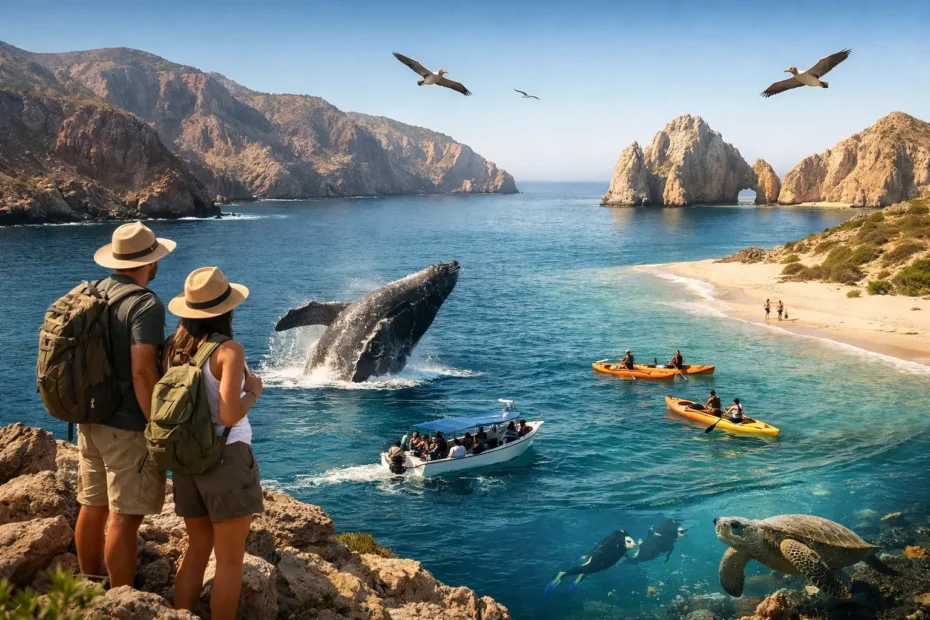
A whale’s breath hangs in the cool morning air off Magdalena Bay. Sea lions bark from a rocky island near La Paz. By afternoon, the same day might end with fish tacos beside the Sea of Cortez, sand still on your feet. That is the promise of Baja ecotourism – not simply seeing wild places, but experiencing them with the care they deserve.
Baja California Sur is one of those rare destinations where desert, mountains, islands, and a living sea are never far apart. It can feel wonderfully untamed, especially compared with a resort corridor. But wild does not mean unplanned. The best nature travel here depends on timing, respectful operators, small decisions made before you arrive, and a willingness to let the natural world set the schedule.
What Baja Ecotourism Should Actually Mean
Ecotourism is a word that gets used freely. A boat tour with a pretty view is not automatically eco-conscious, and a hotel’s reusable water bottle does not erase a careless wildlife encounter. In Baja, meaningful ecotourism means choosing experiences that minimize pressure on fragile places while supporting the people who live and work here.
That starts with the basics: licensed captains who know local conditions, boats that follow wildlife-distance rules, guides who can read animal behavior, and operators who do not chase an encounter at the expense of the animal. It also means understanding that the most memorable moment may be the one you observe quietly from a respectful distance.
Baja rewards that patience. A curious gray whale may approach a panga on its own terms. A school of mobula rays may leap beyond the boat rather than right beside it. A whale shark may disappear after a few graceful passes. None of that is a failed outing. It is nature behaving like nature, which is far more extraordinary than a staged experience ever could be.
The Wild Experiences That Make Baja Special
The Sea of Cortez and Espíritu Santo
From La Paz, the waters around Espíritu Santo Island offer one of the region’s great day adventures. The island’s volcanic cliffs rise out of blue water, with hidden coves, sea caves, seabird colonies, and a lively sea lion colony nearby. Depending on the season and conditions, travelers can snorkel over reefs, watch dolphins pass the bow, or relax on a beach that feels remarkably far from civilization.
The sea lion encounter is a favorite for good reason. These animals are fast, playful, and completely in charge of the interaction. A good guide will help guests enjoy the experience without crowding the colony, standing on sensitive rocks, or turning the water into a chaotic splash zone. Smaller groups and a calm approach make a noticeable difference for both wildlife and guests.
Whale Sharks, Whales, and Seasonal Magic
Baja California Sur runs on seasons. Whale shark experiences around La Paz generally take place in the cooler months, when these gentle giants may feed in the bay. Gray whale season brings another kind of wonder to the Pacific side, particularly around the lagoons of Magdalena Bay. Humpbacks, blue whales, fin whales, dolphins, and other marine life can also appear depending on where and when you travel.
This is where thoughtful planning matters. Travelers sometimes arrive with one species fixed in mind, only to discover that nature has its own calendar. Water temperature, food availability, wind, permits, and migration patterns all affect what is possible. A flexible itinerary gives you a much better chance of having a remarkable trip than trying to force one perfect wildlife moment into a rigid schedule.
Desert Landscapes Worth Slowing Down For
Baja ecotourism is not only about boats. The peninsula’s desert is alive with detail: cardón cacti standing like green cathedrals, cirios twisting toward the sky, roadrunners crossing quiet trails, and night skies that make city dwellers stop talking for a minute.
A guided desert walk, off-road excursion, or visit to a remote beach can reveal an entirely different Baja. The key is to stay on established routes, avoid disturbing plants and nesting areas, and travel with someone who understands the terrain. Desert beauty can look forgiving from a photograph. In reality, sun, heat, loose roads, and lack of services deserve real respect.
How to Travel More Responsibly in Baja
The good news is that travelers do not need to be marine biologists or minimalist backpackers to make better choices. Comfort and conservation can absolutely coexist. In fact, when a trip is well organized, responsible choices are often the easier choices.
Choose operators for their practices, not just their price or social-media footage. Ask how many guests are on the boat, whether guides provide a wildlife briefing, and how they handle bad weather or an animal that seems stressed. The cheapest tour can become expensive if it means overcrowding, poor equipment, rushed decisions, or a captain who takes unnecessary risks to satisfy a camera-ready wish list.
On the water, bring a refillable bottle, reef-conscious sun protection, and clothing that reduces your need for excessive sunscreen. Never feed wildlife, touch marine animals, collect shells or coral, or leave trash behind. Those sound like simple rules, but they matter in popular coves and fragile island environments where thousands of small actions add up quickly.
Your spending also has an impact. Eat at local restaurants, work with knowledgeable local guides, and select businesses that employ residents and invest in safe, respectful operations. Baja is not a theme park built for visitors. It is home to fishing families, marine professionals, artisans, conservation workers, and communities whose relationship with the sea goes back generations.
Why Small-Group Travel Makes a Difference
A crowded boat changes the entire feeling of a wildlife outing. More noise, more movement, and more pressure to give every guest the same close-up photograph can make an encounter less comfortable for animals and less meaningful for people.
Private and small-group adventures offer a different rhythm. There is more room to ask questions, adjust for seasickness, linger at a quiet cove, or skip a rough-water crossing when conditions are not right. Couples may want privacy and a slower pace. Families may need shade, snacks, and bathroom planning. Divers may prioritize safety standards, gear logistics, and the captain’s experience with changing currents.
This is one reason a curated itinerary can be so valuable. At Sunny Adventure Travel, I personally look at the details that shape the day: the boat, captain, group size, travel time, weather pattern, and what will make the experience enjoyable for your particular group. A beautiful destination deserves more than a generic booking confirmation.
Timing Your Baja Nature Trip
There is no single “best” month for Baja California Sur. The right time depends on what you hope to see and how you like to travel. Winter can bring whale activity, comfortable hiking temperatures, and busier holiday periods. Spring often offers beautiful weather and clear water, though wind can affect boating plans. Summer brings warmer seas and excellent conditions for certain diving and snorkeling adventures, along with hotter desert days. Fall can feel quieter and wonderfully warm, but weather patterns may require extra flexibility.
If whales are your priority, build your trip around the migration season rather than treating the encounter as an add-on. If diving is the centerpiece, choose dates based on visibility, water temperature, and your experience level. If you want a balanced first visit, combine a few days around La Paz and the islands with time for the Pacific side, desert scenery, or a slower coastal town.
Always leave breathing room in the itinerary. A wind day is not a disaster when you have an alternate plan for a food experience, a cultural stop, a scenic drive, or simply a relaxed afternoon by the water. The travelers who fall hardest for Baja are usually the ones who stop trying to control every hour.
Let the Place Set the Pace
The finest Baja experiences are not measured by how many animals you checked off a list or how many coves you raced through before sunset. They are the quiet seconds: a whale’s tail slipping below the surface, the sound of fins in clear water, the first stars appearing over a desert camp.
Come prepared, travel with care, and leave room for surprise. Baja will handle the extraordinary part.