


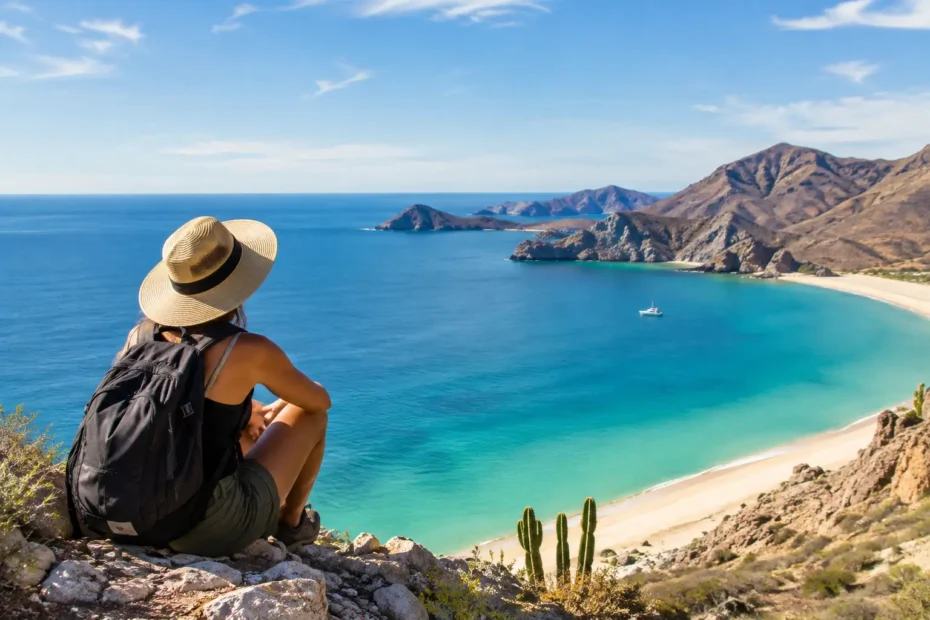
A February morning in La Paz can begin with a light jacket, a hot coffee, and a glassy Sea of Cortez waiting for a whale shark outing. By lunchtime, you may be peeling off that extra layer for fish tacos in the sun. That is Baja Sur weather in one day: generous, changeable in small ways, and central to how you should plan your adventure.
Baja California Sur is blessed with more blue-sky days than most travelers can use, but the right month depends on what you want from the peninsula. Are you dreaming of humpback whales breaching near Cabo San Lucas? Swimming beside playful sea lions? Diving warm blue water? Or escaping winter somewhere that feels wild, beautiful, and blissfully far from gray skies? Each experience has its season.
Baja Sur Weather at a Glance
Baja California Sur has a dry desert climate wrapped around two very different coastlines. The Pacific side, including Todos Santos and the area north of Cabo San Lucas, tends to be cooler, windier, and more affected by ocean swells. The Sea of Cortez side, including La Paz, is often sunnier, warmer, and famously calm on the right morning.
There is no single “bad” season. There are, however, seasons that are better for particular travelers. Winter brings mild days, cool evenings, and some of the region’s most sought-after wildlife. Spring offers beautiful weather and increasingly warm water. Summer delivers bathtub-warm seas and exceptional underwater visibility, along with serious heat. Fall can be wonderfully quiet and warm, though it is also the period when tropical weather deserves close attention.
The desert makes the rules here. Days can be warm while evenings cool quickly, especially from December through March. Wind can reshape a boating plan. A summer storm can pass through and leave the next day dazzlingly clear. That is why a thoughtful itinerary always has a little flexibility built in.
Winter: Whale Season and Easy Desert Days
From December through March, daytime temperatures commonly sit in the comfortable 70s Fahrenheit, though mornings and evenings can feel cool. This is prime season for travelers leaving northern winters behind, and it is a beautiful time for couples, families, and anyone who prefers sightseeing and active days without intense heat.
It is also whale season. Gray whales arrive in Pacific lagoons farther north, while humpback whales are frequently seen off Cabo and along the southern Pacific coast. Blue whales may be encountered in the Sea of Cortez from roughly January into March, especially on longer expeditions from Loreto. Seeing one of these giants surface in the morning light is the sort of memory that changes the temperature of every winter back home.
Water temperatures are cooler, generally in the upper 60s to low 70s. Snorkeling is still excellent with the right wetsuit, and diving can be spectacular, but this is not the season for travelers who only enjoy very warm water. Northerly winds can also affect boating conditions, particularly in the afternoon. Early departures are your friend.
If you are visiting in winter, bring a light insulated layer, a windbreaker, sunscreen, and something warm for dawn boat rides. The sun is powerful even when the air feels mild.
Spring: The Sweet Spot for Active Travelers
April through June is often the most balanced answer to the question, “When should I go?” The Baja Sur weather grows warmer, the desert is still comfortable for hiking, and the Sea of Cortez begins to feel more inviting by the week. Crowds from peak winter travel start to thin, but the region is very much alive.
April and May are especially lovely for travelers who want a mix of land and sea. Think kayaking beneath golden cliffs near La Paz, a private beach picnic, a day trip to Isla Espíritu Santo, and an evening meal outdoors without the heavy summer heat. Water temperatures rise from the low 70s into the upper 70s, and snorkeling becomes more comfortable for most guests.
June is a transition month. It can be excellent, especially for divers and ocean lovers, but midday heat begins to demand smart pacing. We plan water activities early, reserve shaded time for the middle of the day, and let the desert rest while you enjoy a long lunch or a luxurious hotel pool. Baja is not a destination for proving toughness. It is a place for savoring the day.
Summer: Warm Water, Big Marine Life, Real Heat
July through September brings the warmest sea temperatures of the year, often in the mid-80s. For divers, snorkelers, and travelers who have been dreaming of floating in clear, silky water, this can be an extraordinary season. The Sea of Cortez is at its most inviting temperature, and marine life can be exceptional.
La Paz is especially compelling in late summer and early fall for the seasonal whale shark experience, when conditions and wildlife patterns align. Sea lion colonies are lively, tropical fish are abundant, and dive trips can deliver the warm-water magic many people imagine when they picture Baja.
The trade-off is heat. Daytime temperatures can reach the 90s or higher, with humidity increasing around tropical weather. This is not the ideal season for all-day desert hiking, and families with very young children may prefer spring or winter. It can also be less comfortable for guests who struggle with high temperatures or need a packed, constantly moving itinerary.
Summer travel works beautifully when it is designed around the climate: early boat departures, air-conditioned transportation, excellent hydration, shaded meals, and unhurried afternoons. A well-planned day can feel indulgent rather than exhausting. A poorly planned one can feel like you have been left in an oven with a beautiful view.
Fall: Warm Seas, Fewer Crowds, More Variables
October and November can be a magnificent time to visit Baja California Sur. The sea remains warm, the most intense summer heat begins to soften, and the landscape feels quieter before winter’s busiest period arrives. For divers and snorkelers, October can offer some of the year’s best conditions, including warm water and excellent visibility.
There is a practical caveat. Hurricane season in the eastern Pacific runs from late spring through fall, with the greatest concern generally concentrated from August into October. A direct storm impact is not a daily expectation, but weather systems can bring rain, wind, port closures, or itinerary changes.
This is where local oversight matters. A responsible captain or travel planner does not gamble with the ocean because a calendar says it is your boat day. We watch forecasts, use trusted operators, and adjust plans early when necessary. Sometimes that means moving a sea excursion to a calmer morning. Sometimes it means replacing it with a memorable land-based experience. Safety is never the compromise that makes a vacation feel adventurous.
By November, conditions often settle into a particularly attractive blend of warm water, sunny days, and cooler evenings. It is an excellent month for travelers who want variety without summer’s full force.
What to Pack for Baja Sur’s Changing Conditions
Packing for Baja is less about bringing more and more about bringing the right layers. Lightweight, breathable clothing is essential in every season, as are a hat, polarized sunglasses, reef-safe sunscreen, and sandals that can handle sand and boat decks. A long-sleeve sun shirt earns its place quickly, especially on full days at sea.
From late fall through early spring, add a light jacket or fleece and a windproof outer layer for morning cruises. For diving or extended snorkeling, ask in advance about wetsuit needs rather than assuming the water will feel tropical. Your comfort level, time in the water, and wind exposure all matter.
A dry bag is useful year-round, and motion-sickness preparation is worth considering if you are uncertain about boats. Even experienced travelers can have an off day when the swell picks up. Good planning includes knowing when to choose a protected bay, a larger vessel, or a land adventure instead.
Let the Weather Shape the Adventure, Not Limit It
The best Baja Sur trip is not built around a generic forecast. It is built around your priorities, your comfort with heat or cool water, and the experiences that brought you here in the first place. A diver may choose September for warm water and pelagic action. A whale lover may gladly wear a jacket in February for the chance to witness a blue whale. A honeymoon couple may find their perfect rhythm in May, when evenings are balmy and the days still feel effortless.
At Sunny Adventure Travel, I help guests match the season to the experience, then make the day work beautifully once they arrive. Baja rewards travelers who leave room for the sea, the wind, and a little wonder to have their say.
Pick the month that calls to you, pack for the edges of the day, and let Baja Sur surprise you with the kind of weather that makes you want to stay outside just a little longer.