


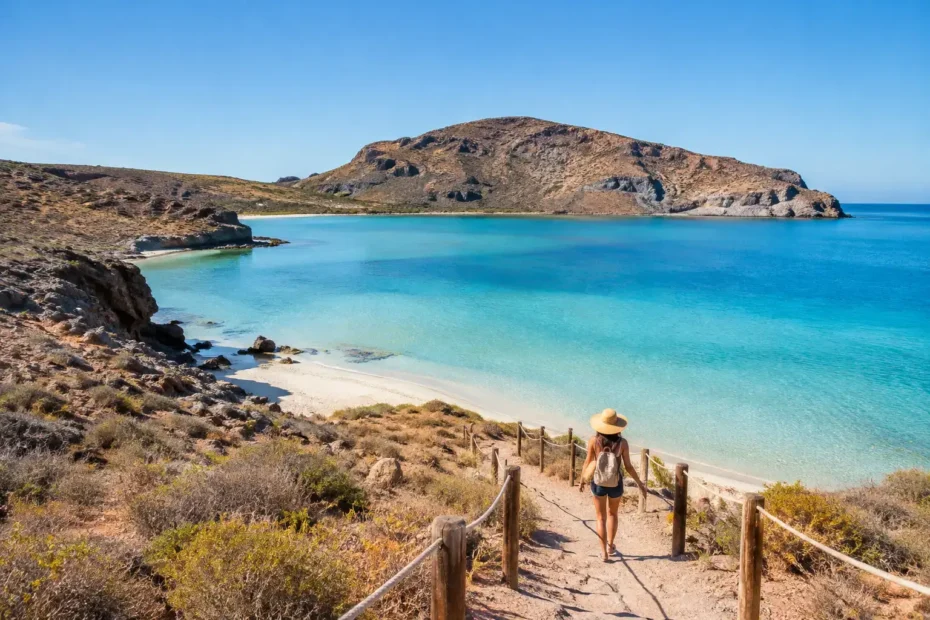
The first glimpse of Balandra can make even seasoned travelers go quiet: pale sandbars curving through clear, shallow water, ochre desert hills rising behind the bay, and a horizon that feels almost too beautiful to be real. But Balandra beach access is not as simple as driving up whenever you feel like a swim. This protected bay is carefully managed, and a little planning is what separates a magical morning from a frustrating wait in the sun.
Balandra is worth doing properly. The secret is to treat it less like a resort beach and more like the fragile natural treasure it is.
Balandra beach access: what has changed
Balandra sits roughly 16 miles north of La Paz, along a scenic coastal road. It is part of a protected natural area, and visitor access is controlled to reduce pressure on its dunes, mangroves, shallow marine habitat, and famously calm lagoon.
In recent years, authorities have used daily visitor limits and timed entry periods during busy seasons. Exact procedures, hours, capacity, parking arrangements, and whether advance registration is required can change with the season, holidays, weather, conservation decisions, or local operations. Do not rely on an old social-media post or a blog written two years ago. Confirm the current rules shortly before your visit through official local sources or with a trusted local operator.
This is not bureaucracy for its own sake. Balandra’s beauty depends on keeping the water clear, the sand dunes intact, and the bay from becoming a crowded free-for-all. The trade-off is clear: access may take more patience, but the experience is far better than trying to enjoy this small, delicate place surrounded by hundreds of people.
Choose your timing carefully
If you are visiting independently, an early start is usually the wisest choice. Parking can fill quickly, especially from late fall through spring, during Mexican holidays, and whenever cruise or resort traffic is high in La Paz. Arriving early also gives you gentler temperatures, softer light on the hills, and calmer conditions before afternoon breezes build.
The best time depends on what you want from the day. Morning is ideal for swimming, photos, paddleboarding, and a quieter atmosphere. Later sessions can be lovely if you prefer warmer water or a slower pace, but heat and wind are more likely. Summer can be spectacularly uncrowded, yet the desert heat is serious. Winter and spring bring more comfortable daytime temperatures, although the water may feel brisker than visitors expect.
Wind deserves special respect. Balandra is sheltered compared with open-sea beaches, but conditions can still change. A breezy afternoon may be pleasant on shore and less enjoyable on a paddleboard. If you are bringing children, first-time swimmers, or anyone who is uneasy in the water, mornings generally offer the easiest conditions.
Getting there from La Paz
The drive from central La Paz is straightforward, but this is one of those outings where logistics shape the mood of the day. A rental car gives you independence, yet it also means navigating parking, carrying your own water and shade, and being responsible for the return drive after time in the sun.
Taxis and private drivers are another option, but agree on the return plan before you arrive. Cell service can be inconsistent around the beach, and a casual “we will call when ready” arrangement is not always practical. Public transportation may be available at certain times, but it is not the choice I would recommend to travelers with limited vacation time, beach gear, or a firm schedule.
For couples, families, and private groups, organized transportation can make the day feel much lighter. You can be collected at your accommodation, arrive with a sensible timing plan, and avoid turning a beautiful beach visit into a parking and pickup puzzle. It also leaves room to combine Balandra with nearby coastal scenery, a relaxed local lunch, or another carefully chosen stop rather than rushing back to town.
What to expect once you arrive
Balandra is not a full-service beach club, and that is exactly why people love it. Do not expect a row of loungers, loud music, abundant restaurants, or a resort-style setup. Facilities may be limited, so bring what you genuinely need and take every item back with you.
The bay is famous for shallow water that extends far from shore. It is wonderfully inviting for wading and floating, but it can surprise confident swimmers who expect deeper water. At low tide, you may walk a long way across warm, ankle-deep sandbars. At higher tide, the lagoon looks and feels very different. Both are beautiful, but tide timing matters if you have your heart set on swimming, paddling, or particular photographs.
Many visitors want to see El Hongo, the mushroom-shaped rock that has become Balandra’s recognizable landmark. It is a fun photo stop, but it is only one small detail in a much larger landscape. Give yourself time to walk, watch the changing colors in the water, and look toward the mangroves where birds and juvenile marine life find shelter.
Swim, paddle, and explore with care
Balandra looks gentle, and for much of the year it is. Still, the usual Baja rules apply. Wear sun protection that can handle real desert light, drink more water than you think you need, and keep an eye on children at all times. The shallow lagoon is easier than open water, not risk-free.
If you rent or bring a paddleboard or kayak, respect marked areas and any restrictions in place that day. Avoid disturbing birds, do not enter sensitive mangrove zones, and give other beachgoers room. Anchors, trampling, plastic waste, and careless snorkeling can do real harm in shallow ecosystems.
There is also a simple comfort question. If you bring a large umbrella, chairs, coolers, inflatable gear, and a full picnic setup, access and carrying become more complicated. If you travel light with water, towels, reef-safe sun protection, hats, and a few snacks, the day is easier. It depends on your group, of course. Families with young children may need more equipment, while a couple can often enjoy Balandra with very little.
A better alternative when access is limited
Sometimes the most experienced decision is not to force Balandra into the itinerary. If capacity has been reached, weather is unpleasant, or your group would rather avoid a very early departure, La Paz has other beautiful coastal options. Tecolote Beach, just beyond Balandra, is more developed and often better for a casual lunch, water activities, and a flexible beach day. It has a very different character, but that can be an advantage.
For travelers who want the Sea of Cortez to feel truly wild, a boat day around Isla Espíritu Santo offers another perspective entirely: volcanic cliffs, sea lions, remote coves, and water that changes color by the minute. Balandra is iconic, but it is not the only extraordinary place on this coast. A well-designed itinerary leaves room for conditions rather than treating one beach as a pass-or-fail mission.
That is how I plan private days for guests: I watch the practical details, listen to what the group actually wants, and keep a strong alternative ready. After decades on and around the water, I have learned that flexibility is not a compromise. It is often the difference between a good trip and the story you tell for years.
Make Balandra part of a balanced La Paz day
Balandra is best when you do not overpack it. Give the bay a few unhurried hours, then move on before the heat, crowds, or fatigue take over. A morning swim followed by a local lunch in La Paz can be perfect. So can pairing it with a scenic coastal drive or a quiet sunset back in town.
Sunny Adventure Travel can arrange private adventures and small-group expeditions that include Balandra when conditions and access make sense, with transportation and local guidance handled personally. Contact us for a personalized Baja California Sur itinerary built around your pace, interests, and comfort. The best Balandra day is not the one with the most activities – it is the one that leaves you with salt on your skin, time to breathe, and the feeling that you found the Sea of Cortez at its best.