


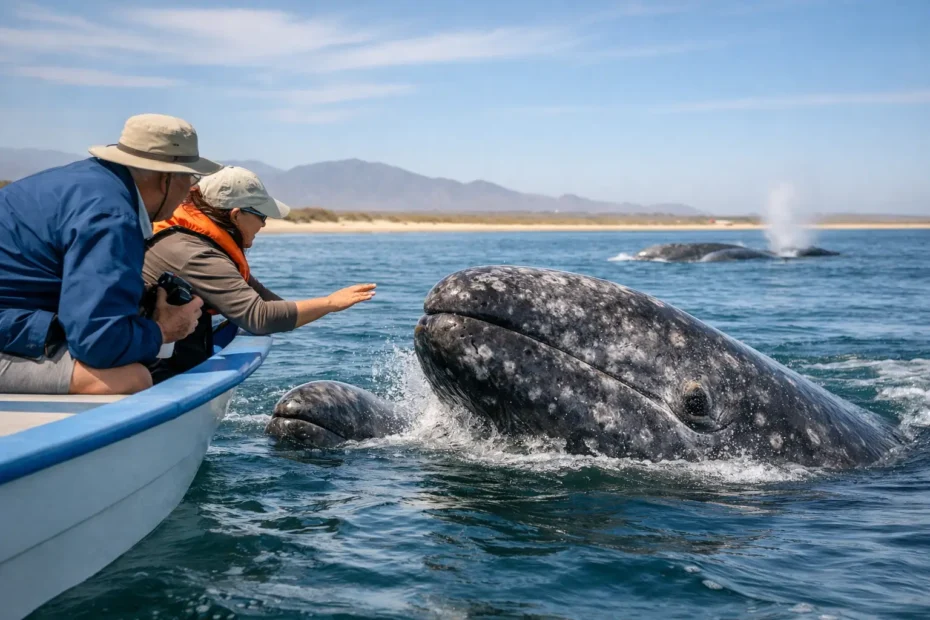
The first time a gray whale rises beside a small panga, the whole boat tends to go quiet. You hear the soft rush of its breath, see the patterned gray skin just below the surface, and suddenly the long drive across Baja feels very worthwhile. Gray whale season is one of Baja California Sur’s most moving wildlife experiences, but the right timing, location, and boat operator make all the difference between a pleasant outing and a day you will tell stories about for years.
These are not aquarium animals performing on cue. They are wild, powerful migrants who have traveled thousands of miles from Arctic feeding grounds to the sheltered lagoons of Baja’s Pacific coast. Seeing them well means respecting their rhythm, giving yourself enough time, and choosing a trip designed around the whales rather than a rushed photo stop.
When Is Gray Whale Season in Baja?
Gray whales usually begin arriving in Baja’s Pacific lagoons in December. The season generally runs through April, with January through March offering the most consistently rewarding window for visitors. Exact timing shifts slightly from year to year, because nature does not carry a calendar, but this is the practical planning range I use for guests who want a strong chance of meaningful sightings.
December is the early-arrival period. The weather can be lovely, holiday travel is in full swing, and some whales are already entering the lagoons. It can be a wonderful choice if your travel dates are fixed around Christmas or New Year’s, though encounters may be less concentrated than later in the winter.
January and February are often the sweet spot. More whales are present, including mothers with calves later in the season, and the lagoon activity can be extraordinary. March remains excellent, particularly for travelers who want warmer days and a better chance of seeing calves grow bolder beside their mothers. By April, many whales begin their northbound journey, although sightings can still be possible in the right place.
If you are building a full Baja California Sur vacation, gray whale viewing works beautifully with La Paz, Todos Santos, Cabo, desert excursions, fine local food, and a few deeply deserved beach days. Just remember that the whale lagoons are on the Pacific side and require real travel time. This is not an activity to squeeze between breakfast at your resort and a 2:00 p.m. spa appointment.
Where to See Gray Whales in Baja California Sur
The most celebrated gray whale experiences happen in protected Pacific lagoons, especially Magdalena Bay and San Ignacio Lagoon. Both are remarkable, but they offer different logistics and should be selected according to your route, comfort preferences, and available time.
Magdalena Bay
Magdalena Bay is often the most practical gray whale destination for travelers beginning in Los Cabos, Todos Santos, or La Paz. The journey brings you across the peninsula toward a vast, quiet lagoon system edged by dunes, mangroves, and wide-open Pacific light. It feels remote in the best way, while still being accessible as a carefully organized day trip or overnight experience.
This area is known for intimate panga encounters when conditions and whale behavior allow. A curious whale may approach the boat, sometimes with a calf nearby, but there is never a promise of a touch or a close pass. The most ethical captains let the whales decide. That choice matters. A whale that approaches voluntarily gives you a far more meaningful encounter than one that has been crowded or pursued.
San Ignacio Lagoon
San Ignacio Lagoon is farther north and feels more remote, more expedition-like, and wonderfully disconnected from the busy world. It is a superb option for travelers with several days to devote to whale season, especially those who appreciate a wilderness setting and are happy trading some convenience for a deeper immersion.
This is often best approached as an overnight or multi-night journey rather than a quick excursion. Accommodations can range from comfortable eco-camps to more tailored arrangements, depending on the season and your style of travel. The reward is time: time for multiple boat outings, changing light over the lagoon, and the unhurried feeling that makes Baja so special.
What Makes a Great Whale-Watching Day
The whales are the stars, but the human details determine whether the day feels effortless or exhausting. An excellent outing starts early, uses properly maintained boats, includes licensed local captains who understand the lagoon rules, and sets realistic expectations before anyone steps aboard.
The ride can be cool in the morning, even when Baja looks sunny and warm from your hotel terrace. Bring a light windproof layer, sun protection, sunglasses with a strap, and a secure case for your phone or camera. Avoid carrying loose hats, oversized bags, or anything you would be upset to see bouncing across a wet boat floor.
Seasickness is less common inside calm lagoons than on an offshore adventure, but it can still happen during the approach or on a breezy day. If you are sensitive, take your preferred motion-sickness medication as directed before travel, eat a light breakfast, stay hydrated, and focus on the horizon. Do not wait until you feel miserable to mention it. A good guide can often make simple adjustments that help.
Families should also think beyond the age minimum. A child who loves animals and can sit comfortably in a small boat may have the time of their life. A child who dislikes wind, long drives, bathroom limitations, or unexpected schedule changes may be happier with a different Baja adventure that day. There is no prize for forcing an itinerary.
Gray Whale Season Etiquette That Protects the Experience
Gray whales have returned to these lagoons for generations. Their trust is precious, and it depends on everyone behaving responsibly. The best operators follow protected-area regulations, limit their approach, maintain appropriate speed, and never chase whales for a closer photograph.
Your role is simple: keep hands inside the boat unless your captain says otherwise, remain seated when asked, speak quietly around close animals, and let the crew direct the moment. If a whale comes near, enjoy it fully without turning the encounter into a scramble for the perfect video. One clear photo is lovely. Being present when a giant, wild animal looks directly at your boat is better.
There is also a practical reason to choose quality over bargain hunting. Cheap tours can sometimes mean crowded boats, hurried schedules, weak safety practices, or captains under pressure to deliver a dramatic interaction. Wildlife does not owe us drama. A well-run trip gives you the best chance of a great day while protecting the animals and the people in the boat.
How to Build the Right Baja Whale Trip
For most visitors, I recommend allowing more time than you think you need. A same-day gray whale outing can work when the schedule and route are sensible, but an overnight stay near the lagoon changes the pace entirely. You are not watching the clock, worrying about a long return drive, or skipping a second outing because dinner reservations are calling.
Couples and honeymooners may prefer a private or very small-group experience paired with comfortable lodging and a relaxed return to La Paz or Todos Santos. Friend groups often enjoy combining whale watching with a desert road adventure and a lively dinner afterward. Serious wildlife travelers can build a longer Pacific-side journey around multiple excursions, birdlife, mangroves, and quiet evenings under Baja’s famously clear stars.
Divers should plan carefully. Gray whale season overlaps with excellent marine experiences elsewhere in Baja, but a lagoon whale trip is not a substitute for diving, and diving conditions vary considerably by location and month. A thoughtful itinerary keeps long drive days, boat days, and rest days in balance. You want to arrive at the lagoon alert, comfortable, and ready to enjoy the moment, not worn out from trying to do all of Baja in three days.
At Sunny Adventure Travel, I personally look at your starting point, travel style, group makeup, and tolerance for road time before recommending a whale plan. The right trip is not always the shortest one, the fanciest one, or the most photographed one. It is the one that gives you safe access, good people around you, and enough breathing room for Baja to work its magic.
Gray whales ask us to slow down a little. Give them the season they need, choose a respectful captain, and leave space in your itinerary for wind, weather, and surprise. When that broad gray head lifts beside your boat, you will be glad you did.