


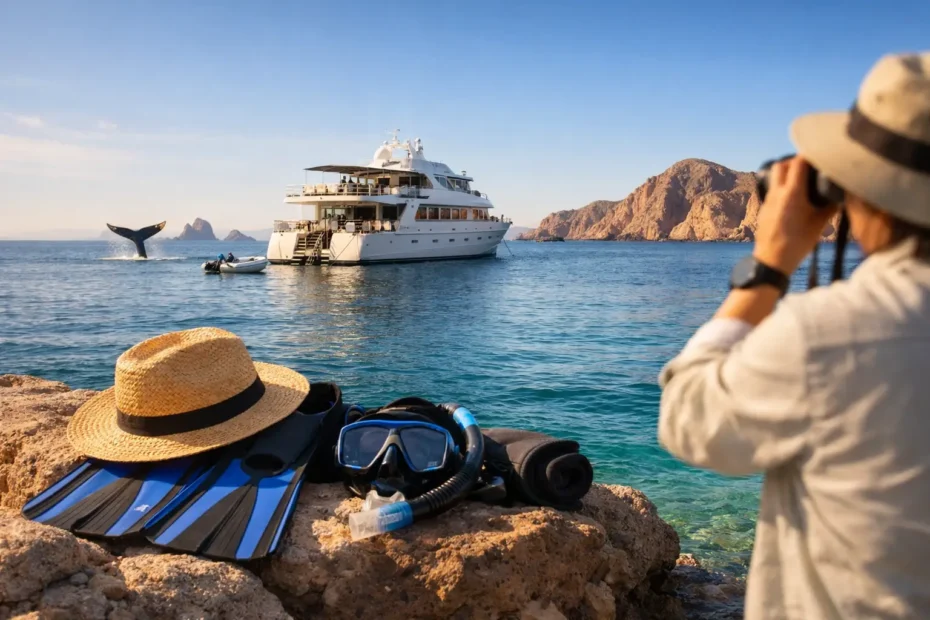
A great Baja liveaboard can put you in blue water with a school of hammerheads, watching sea lions twist through sunbeams, or sharing a quiet anchorage beneath a desert sky. A poor fit can mean long crossings, a cramped cabin, seasickness, and an itinerary that misses the wildlife you came to see. To choose a Baja liveaboard well, start with the experience you want, then work backward to the boat, route, season, and level of support that will make it feel extraordinary rather than exhausting.
Start With the Baja Experience You Actually Want
“Baja” covers more than one kind of liveaboard adventure. The Sea of Cortez, often sailing from La Paz, is a more intimate, varied journey of rocky islands, clear coves, sea lion colonies, reef dives, snorkeling, paddleboarding, and occasional encounters with whales, dolphins, mobula rays, and whale sharks. Conditions and wildlife shift by season, which is part of the magic.
Revillagigedo, often called Socorro, is a different commitment. These remote volcanic islands lie far offshore and are known for serious big-animal diving: giant manta rays, sharks, dolphins, and, in the right season, humpback whales. The crossings are longer, the itinerary is more dive-focused, and the open-ocean setting demands confidence, experience, and a genuine appetite for adventure.
Neither route is automatically better. A couple hoping for a relaxed blend of snorkeling, diving, beach time, and Baja landscapes may be far happier in the Sea of Cortez. A highly experienced diver whose dream is to spend a week around oceanic mantas and sharks may find Socorro worth every nautical mile. The trick is not choosing the most famous trip. It is choosing the one that matches your dream day on the water.
Ask What You Want Between Dives, Too
A liveaboard is not only a dive schedule. You will eat, sleep, rest, talk, watch the horizon, and spend meaningful time onboard. Some guests love a social boat with shared tables, lively post-dive conversations, and a full group atmosphere. Others want a quieter vessel, more personal space, and a cabin where they can truly decompress.
Think about whether you want snorkeling options for a non-diving partner, flexible shore excursions, photography support, or a more private charter feel. If you are traveling with friends or family members with different comfort levels, this matters even more. The right boat creates room for everyone to enjoy the trip, not just the most experienced diver in the group.
Choose a Baja Liveaboard by Season, Not Just Date
Baja’s wildlife calendar is one of the region’s greatest gifts, but it does not work like a fixed theme-park schedule. Water temperature, currents, wind, plankton blooms, and animal movements all influence what you see. A responsible operator will never promise a specific creature on a specific day.
In the Sea of Cortez, warmer months can bring bathwater-like conditions in some areas, lush visibility on the right days, and exciting pelagic activity. They can also bring heat, wind, and occasional storm considerations. Cooler months may offer a different cast of marine life, more comfortable air temperatures for some travelers, and excellent visibility, depending on the route.
Socorro’s primary season generally runs through the cooler months, when divers come for the large pelagic encounters that made the archipelago legendary. Water can be cooler than guests expect, and surface conditions are part of the open-ocean reality. If your goal is manta interaction or seasonal humpback activity, timing should lead the conversation.
A good planning question is not, “What is the best month?” It is, “What matters most to me, and what trade-offs am I comfortable making?” If you want warmer water, you may accept different visibility or wildlife patterns. If you want a particular seasonal encounter, you may need to pack a thicker wetsuit and embrace a livelier crossing.
Look Closely at the Boat, Not Just the Photos
Almost every liveaboard looks beautiful in a wide-angle sunset photo. The useful details are often less glamorous: cabin layout, bathroom access, shaded deck space, dive-deck organization, water-making capacity, and how the crew handles gear between dives.
Cabins vary widely. Some have private bathrooms and generous storage; others are compact, shared, or located near noisier areas of the vessel. If you are a light sleeper, ask where the cabin sits relative to the engine room, salon, galley, and crew work areas. If you are traveling as a couple, confirm bed configuration rather than assuming every “double” is the same.
Also ask about the number of guests the boat carries and the ratio of guests to guides. A smaller group can mean more attentive briefings, easier wildlife viewing, and less waiting at the dive deck. A larger vessel may offer more amenities, more stable handling, and a broader social atmosphere. Again, it depends on what feels like vacation to you.
For divers, nitrox availability, compressor reliability, camera tables, rinse tanks, tank setup, and tender operations can make a real difference. For snorkelers, ask whether the boat has guides who are genuinely attentive to surface guests rather than treating them as an afterthought.
Safety Is a Feeling, but It Is Also a System
Baja is wonderfully wild. That is why safety standards should be a decision-maker, never an afterthought.
Look for a vessel with clear emergency procedures, trained crew, reliable communications, oxygen, first-aid equipment, life rafts, and a captain with real local sea knowledge. Ask how dive guides assess conditions and whether the itinerary can change when wind, current, visibility, or guest ability calls for a different plan. Flexibility is not a weakness. It is how experienced crews protect both the adventure and the people having it.
For remote routes such as Socorro, confirm evacuation protocols and medical support arrangements. If you have a medical condition, are taking medication, or have not dived recently, discuss it honestly before booking. There is no prize for pushing through a trip that is beyond your current readiness.
Seasickness deserves the same straightforward approach. Even seasoned travelers can feel the effects of a long crossing or a rolling anchorage. Speak with your physician about appropriate prevention, pack remedies you know work for you, and choose a vessel with a layout that gives you the best chance of comfort. I have seen guests transform their whole trip simply by preparing for this small but very real part of life at sea.
Match the Itinerary to Your Experience Level
A Baja liveaboard should challenge you in the right ways, not leave you managing stress underwater. Newer divers may thrive on a Sea of Cortez itinerary with protected sites, patient guides, and a manageable pace. More advanced divers may seek current, deep blue-water action, and remote pinnacles where pelagic life is part of the point.
Read the stated certification and dive-experience requirements carefully. Then interpret them honestly. A logged dive count is useful, but recent experience matters just as much. Someone with 80 dives completed years ago may need a refresh before a demanding offshore expedition. Someone with 35 recent dives in current and variable conditions may be more prepared than the number alone suggests.
If you are not diving, do not assume every itinerary will be equally rewarding from the surface. Ask about snorkeling locations, tender rides, beach landings, wildlife watches, and how much of the day is structured around divers. The best boat for a dedicated dive club may not be the best fit for a mixed-interest family group.
Understand What Is Included Before You Commit
The headline price rarely tells the whole story. Check whether the rate includes park fees, fuel surcharges, nitrox, alcohol, rental equipment, gratuities, airport transfers, hotel nights, and taxes. Remote expeditions can carry meaningful additional fees, and it is much nicer to know that before you fall in love with a cabin.
Pay attention to arrival logistics, too. Some trips depart from La Paz, while others require a stay near Cabo San Lucas before boarding. International flights, baggage delays, and the need to arrive a day early can affect the real cost and rhythm of your vacation. Build in breathing room. Baja runs on a more relaxed clock than a major U.S. airport, and that is part of its charm when you are not racing a departure time.
Travel insurance with appropriate dive and evacuation coverage is wise for any liveaboard. It is the kind of detail you hope never to use, but you will be glad to have handled it properly.
Let Local Knowledge Do the Filtering
The best liveaboard for you is not necessarily the newest, largest, or most heavily advertised. It is the boat with the right captain, crew culture, itinerary, safety practices, and guest mix for your particular trip.
At Sunny Adventure Travel, I personally look at those details with you: your dive history, comfort preferences, wildlife wish list, travel dates, and who is coming along. I know that a honeymoon couple, a group of underwater photographers, and a father traveling with his adult children may all need very different versions of the same Baja dream.
Give yourself permission to choose thoughtfully. The payoff is not simply a place on a boat. It is waking before sunrise, coffee in hand, as Baja’s desert coastline glows gold and the sea promises something you have never seen before.