


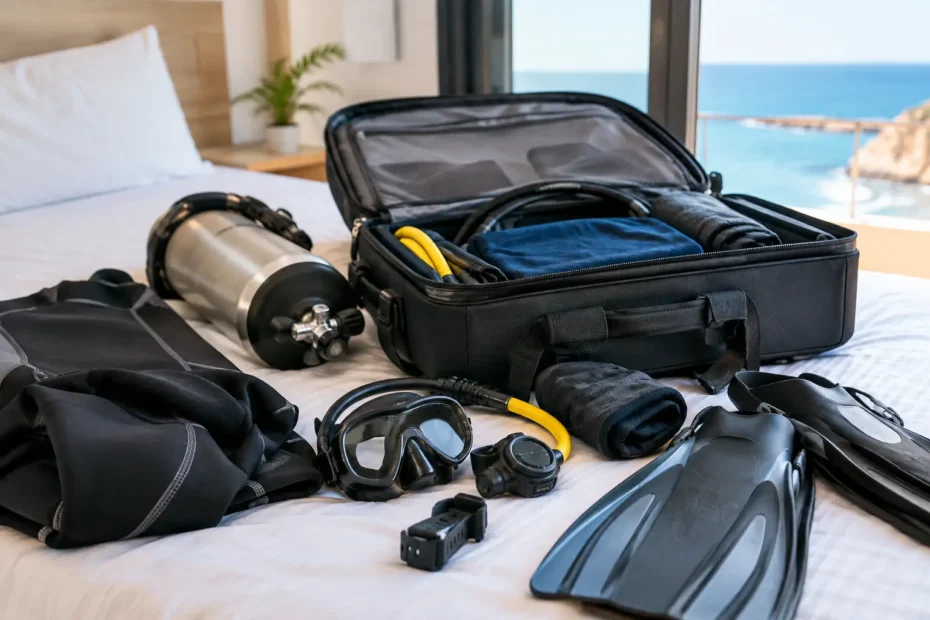
Your Baja dive bag has one job: get you comfortably into the Sea of Cortez without turning your vacation into a baggage-fee workout. Knowing how to pack Baja diving means planning for real conditions, not packing for every possible ocean on Earth. Baja California Sur can give you warm blue water, curious sea lions, playful current, cool thermoclines, panga entries, liveaboard routines, and a little desert dust – sometimes on the same trip.
I have seen divers arrive with enough equipment for an expedition and still miss the one thing that would make the day more comfortable: the right exposure protection. I have also seen travelers pack light, rent wisely, and have more room for a relaxed evening in La Paz. The smart approach is personal, practical, and built around where you are diving, when you are traveling, and how much you genuinely enjoy managing your own gear.
Start With Baja’s Conditions, Not a Generic Dive Checklist
Baja is not one uniform dive destination. The Sea of Cortez changes dramatically through the year, and conditions around La Paz, Cabo Pulmo, the East Cape, and offshore islands can feel quite different from one another.
Late summer and early fall often bring very warm water, sometimes with bath-like surface temperatures. A light wetsuit or even a skin may be enough for some divers, though a little extra coverage protects against sun, jellyfish, and repeated days in the water. Winter and spring are another story. Water temperatures can drop into the 60s Fahrenheit, wind can make boat rides chilly, and a 5 mm or 7 mm wetsuit may be the difference between a magical dive and a short, shivery one.
Do not pack based only on the monthly average. Think about your own cold tolerance, the number of dives planned each day, and whether you will be spending long periods on an open boat. A diver who is perfectly comfortable for one 60-minute dive may feel very different on day three of a liveaboard itinerary.
Ask These Three Questions Before You Zip the Bag
First, are you doing day dives from La Paz or living aboard a vessel for several days? Second, are you bringing familiar gear because fit and comfort matter to you, or would quality rental equipment make travel easier? Third, are you traveling during a season when whales, mobulas, sea lions, or warm-water pelagics shape the itinerary? Those answers determine what earns space in your luggage.
A high-touch dive operator or trip planner should be able to give you current water temperatures, expected boat conditions, rental availability, and honest advice about what is worth bringing. That small conversation can save you from hauling a heavy bag across airports for no reason.
How to Pack Baja Diving Gear by Priority
Bring the pieces that affect safety, fit, and confidence most. For many experienced divers, that means their mask, dive computer, regulator, and exposure suit. Your own mask eliminates the misery of a leak or an unfamiliar fit. Your computer preserves your settings and dive history. A trusted regulator can be comforting, especially if you are diving repeatedly or heading offshore.
Fins are more situational. If yours are lightweight and you love them, bring them. If they are oversized, heavy, or difficult to travel with, ask about rental fins before you commit. The same goes for a BCD. A familiar BCD is wonderful, but it is bulky, and well-maintained rental equipment can be a sensible trade-off for travelers flying with standard baggage allowances.
Use a simple packing hierarchy:
- Always carry on: mask, computer, regulator, medications, prescription mask inserts, certification card, logbook or digital backup, and any batteries or electronics allowed by airline rules.
- Usually check: wetsuit, fins, BCD, reef-safe sunscreen, rash guard, booties, gloves where appropriate, and a compact save-a-dive kit.
- Rent when practical: weights, tanks, and often fins or a BCD if you want a lighter travel day.
- Confirm in advance: specialty gas needs, DIN versus yoke adapters, larger wetsuit sizes, prescription options, sidemount configurations, and camera support on the boat.
Your carry-on is your insurance policy. Airlines occasionally delay bags. If your essential personal items are with you, a late checked bag does not have to cancel your first day underwater.
Pack Exposure Protection for the Boat, Too
The wetsuit gets all the attention, but boat comfort is where many Baja divers get caught off guard. The desert sun is strong, glare comes off the water, and a breezy ride back from the islands can feel cold after several dives.
Bring a long-sleeve sun shirt, a wide-brim hat that will not blow away, polarized sunglasses with a retainer, and a lightweight wind layer. A dry change of clothes is not glamorous, but it feels fantastic after a full day at sea. If you run cold, add a warm layer for early departures and post-dive rides.
Footwear matters more than people expect. Sandals are ideal around the dock, but closed-toe water shoes or sturdy booties can be useful for panga entries, wet decks, and rocky shore access. Leave fancy shoes at home unless your evening plans truly call for them. Baja evenings are relaxed, even when dinner is exceptional.
Protect Cameras, Phones, and Small Essentials
Sea lions do not wait while you troubleshoot a flooded housing. If underwater photography is part of your trip, test every O-ring, charge every battery, and inspect housings at home before you fly. Bring a small dry bag for the boat and keep your camera setup organized in a padded carry-on case.
Salt water, sand, and rushed packing are a rough combination. A microfiber cloth, a few spare O-rings, silicone grease used sparingly, a compact tool kit, and extra memory cards solve many small problems. Do not assume you can easily replace a specific battery, cable, or proprietary charger in a small coastal town.
Your phone also deserves protection. A waterproof pouch is useful for transfers and beach days, but do not rely on it as your only camera solution. Keep travel documents, a backup payment card, sunscreen, and motion-sickness remedies in an easy-to-reach day bag rather than buried under dive gear.
Be Honest About Seasickness and Sun
Even seasoned divers can feel queasy on a moving boat. The Sea of Cortez is often beautifully calm, but weather and distance to offshore sites can change the ride. If you are prone to motion sickness, start your preferred prevention method before boarding, not after you are already uncomfortable. Talk with your doctor about medication choices before your trip, and pack what works for you.
Hydration is equally serious. Between sun, salt, travel, and repeated dives, it is easy to feel depleted. Bring an insulated refillable bottle, electrolytes you know you tolerate, and snacks that are easy on your stomach. Heavy drinking the night before a dive is a poor trade for feeling sharp around boats, currents, and marine life.
Leave Room for the Rest of Baja
A diving vacation in Baja California Sur should not feel like a military equipment transfer. You may find yourself watching whales from shore, strolling the La Paz malecón, taking a desert drive, or lingering over fish tacos after sunset. Pack casual layers, swimwear, light clothing for warm days, and one slightly nicer outfit if you enjoy a special dinner.
Keep luggage manageable. A rolling dive bag plus a personal carry-on is often easier than trying to wrestle multiple oversized cases through airports, transfers, hotel lobbies, and boat docks. If you are traveling with a partner, consider sharing a few nonessential items such as sunscreen, first-aid supplies, and camera accessories.
If you want help matching your gear to a specific Baja itinerary, Sunny Adventure Travel can take the guesswork out of the details – from water conditions and trusted operators to the kind of boat you will actually be stepping onto. That is especially valuable for first-time Baja visitors and divers combining underwater days with whale watching or private excursions.
Pack for comfort, carry the gear you trust most, and leave a little room for surprise. Baja has a wonderful habit of offering an unplanned beach stop, a horizon full of dolphins, or one more sunset you will want to remember.