


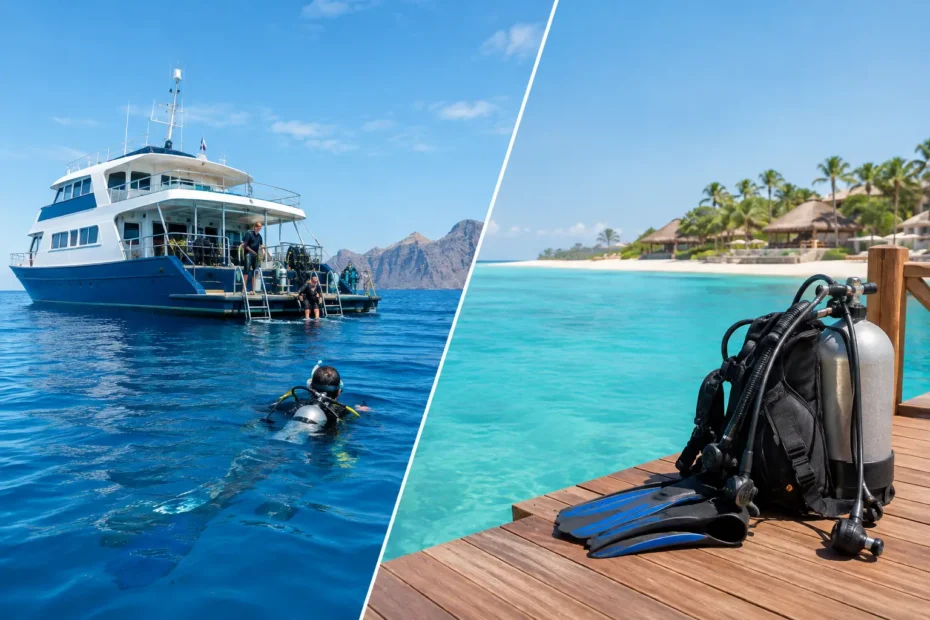
A dive vacation can look very different depending on where you sleep. In Baja California Sur, liveaboard versus resort diving is not simply a question of boat size or hotel preference. It shapes how early you wake up, how much ocean you see, how flexible your days feel, and whether your trip revolves entirely around diving or leaves room for tacos in La Paz, beach time, and a little desert magic.
I have spent enough time on boats and underwater to know that the “best” choice is rarely universal. The right choice is the one that matches your experience level, comfort needs, travel companions, and the kind of story you want to bring home.
Liveaboard versus resort diving: the real difference
A liveaboard is a dive vessel where you eat, sleep, and dive aboard the same boat for several days. In Baja Sur, these trips are often designed around remote, legendary destinations such as the Revillagigedo Archipelago, better known as Socorro, or multi-day routes that maximize time in the Sea of Cortez.
Resort diving means staying ashore – perhaps in La Paz, Cabo San Lucas, Los Barriles, or another coastal base – and joining day boats for one, two, or several dives. You return to your hotel or villa each afternoon, shower in a proper bathroom, choose dinner, and sleep on land.
Neither is automatically more luxurious. A well-run liveaboard can offer beautifully prepared meals, attentive crew, comfortable cabins, and serious diving access. A thoughtfully planned resort stay can pair excellent dive operations with a private driver, a fine hotel, exceptional restaurants, and excursions that make the whole Baja experience feel fuller. The distinction is really about immersion versus flexibility.
Choose a liveaboard when the diving is the main event
A liveaboard earns its place when the sites you want are too distant for practical day trips, or when you want to spend nearly every waking hour close to the water. For divers dreaming of oceanic manta rays, dolphin encounters, schooling fish, sharks, and the dramatic volcanic seascapes of Socorro, a liveaboard is not an upgrade. It is the way you get there.
Remote diving requires distance, fuel, planning, and time. Once the boat reaches the destination, you may enjoy three or four dives a day without commuting back to shore after each outing. That extra time in the water matters. It lets you settle into the rhythm of the place, improve your buoyancy, review photographs between dives, and become part of the small community aboard.
There is also a wonderfully simple quality to boat life. Your gear is close, your next dive is usually discussed over breakfast, and you are not packing a day bag or coordinating transportation every morning. For avid divers, that can feel like freedom.
The trade-offs of sleeping at sea
The same intimacy that makes a liveaboard special can make it less suitable for some travelers. Cabins are compact. Schedules are structured. You cannot decide at 5 p.m. that you would rather wander a waterfront promenade, book a massage, or order another round of margaritas somewhere with your feet in the sand.
Seasickness deserves an honest mention, too. Even travelers who feel fine on a short day boat can struggle during long crossings or overnight passages. Preparation helps: speak with your doctor about medication, bring remedies that work for you, choose a cabin location wisely, hydrate, and listen carefully to the crew. But no professional should promise a perfectly calm sea.
Liveaboards are also best for travelers comfortable with the practical side of group boat life. You will share common areas, follow dive briefings and meal times, and adapt to weather or operational changes. A skilled crew can make the experience feel remarkably easy, but the ocean still sets the schedule.
Resort diving gives Baja room to breathe
For many couples, families, mixed-interest groups, and first-time visitors to Mexico, resort diving is the more rewarding choice. You can enjoy terrific diving while also experiencing the personality of Baja California Sur: early coffee overlooking the Sea of Cortez, a long lunch after the boat returns, local seafood at night, and perhaps a whale shark outing, snorkeling excursion, art walk, or quiet beach day between dives.
La Paz is especially compelling for this approach. The region offers access to sea lion colonies, reefs, wrecks, seasonal wildlife, and the beautiful waters around Espíritu Santo. You can build a dive-centered itinerary without making every hour about diving. That balance is valuable if one partner dives and the other prefers snorkeling, kayaking, wildlife viewing, or simply a peaceful hotel pool.
Resort-based trips are usually easier to tailor around individual comfort. Want two dives rather than three? Need a day off after a flight? Traveling with a non-diver? Prefer a spacious suite, private transfers, and dinner reservations arranged before you arrive? Onshore stays make those choices simple.
What day-boat diving asks of you
Day boats do involve more moving pieces. You need a reliable operator, sensible pickup timing, good equipment handling, clear safety standards, and a captain who understands local weather and conditions. In Baja, those details are not small. The quality of the boat and crew can define the day.
You also have less reach than a liveaboard. Some distant sites are unavailable, and even nearby sites can be affected by wind, current, visibility, or harbor conditions. That is not a failure of the trip. It is simply the reality of responsible marine travel. The best itineraries allow enough days to adapt rather than treating one specific dive site as guaranteed.
Consider your companions before booking
If every person in your group is a committed, experienced diver with the same appetite for early starts and multiple dives a day, a liveaboard can create an unforgettable shared adventure. It is particularly strong for dive clubs, close friends, and divers traveling specifically for a remote marine destination.
If your group includes non-divers, newer divers, teens, travelers who value privacy, or anyone uncertain about motion sickness, a resort base often makes more sense. A non-diving spouse should not feel marooned aboard a boat for a week just because the diver in the family wants more bottom time. Baja offers too much beauty above water to force everyone into the same schedule.
Experience level matters as well. Some liveaboard itineraries involve blue-water entries, current, deeper profiles, challenging surface conditions, or repeated diving over several days. Certification alone is not always the whole story. Recent experience, comfort in variable conditions, air consumption, and honest self-assessment all matter.
A resort itinerary can be more forgiving because it allows time to refresh skills, take shorter outings, or choose gentler sites. That said, there are sophisticated day-boat adventures for highly experienced divers, too. The goal is not to choose the “harder” trip. It is to choose a trip that lets you enjoy the water with confidence.
Budget is more than the advertised price
A liveaboard often looks expensive at first glance, but the rate may include accommodations, meals, diving, tanks, weights, and transportation between the marina and airport. Gratuities, park fees, fuel surcharges, nitrox, rental equipment, alcohol, and hotel nights before or after the trip may be additional. Read the inclusions carefully.
Resort diving can appear more flexible because you choose the hotel category, number of dive days, meals, and extras. But costs can add up across lodging, daily diving, transport, dining, tips, and activities. For a couple where only one person dives, resort diving can be the better value. For a dedicated diver taking several dives a day in a remote location, a liveaboard may offer better value per dive.
The smartest comparison is not price alone. Ask what kind of days you are buying. One trip may deliver maximum marine access; the other may deliver a more complete Baja vacation.
Let the season and destination lead
Baja Sur changes dramatically with the seasons. Water temperatures, visibility, wind, marine life, and boat routes all shift through the year. A trip built around Socorro’s big-animal encounters is a different proposition from a summer escape to the Sea of Cortez, when warm water and abundant life can make snorkeling and diving wonderfully inviting.
This is where local planning becomes more valuable than a generic booking page. The right vessel, hotel, dive operator, and timeline depend on what you most hope to see and how you want to feel while seeing it. At Sunny Adventure Travel, I help guests weigh those details before they commit, because a beautiful itinerary should feel exciting, not like a logistical puzzle.
If you crave the rare pleasure of waking up offshore with the next giant-animal encounter on the schedule, choose the liveaboard and embrace the rhythm of the sea. If you want excellent underwater days wrapped in Baja’s food, beaches, comfort, and easygoing evenings, stay ashore and let each day unfold at your own pace. Either way, leave a little room for wonder. Baja has a habit of offering the moment you did not know to plan for.