


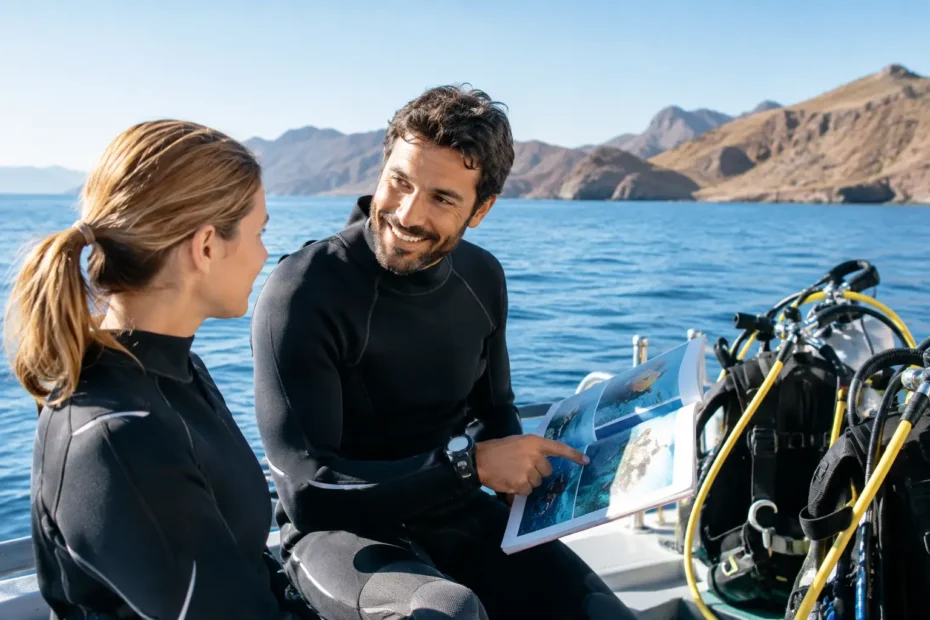
La Paz rewards divers who choose well. One morning you may be slipping into clear blue water beside playful sea lions at Los Islotes; the next, watching a school of jacks sweep across a volcanic reef or descending along the steep walls of a Sea of Cortez island. The PADI dive centers La Paz visitors find can make those moments feel wonderfully easy – or make a promising day feel rushed, crowded, and uncertain.
The good news is that La Paz has a strong diving community and access to some of Baja California Sur’s most memorable underwater country. The better question is not simply, “Which shop has availability?” It is, “Which operator, boat, and itinerary fit the kind of diving trip I actually want?” A couple celebrating a honeymoon, a newly certified diver, a photographer, and a seasoned liveaboard guest may all make different excellent choices.
What Makes La Paz Different for Divers
La Paz is not a resort strip with a single house reef and identical daily schedules. It is a working waterfront city that opens onto the Sea of Cortez, with day boats traveling to islands, rock formations, reefs, and seasonal wildlife areas. Conditions, distances, and marine life can vary considerably by month and by destination.
Los Islotes, part of the Espíritu Santo archipelago, is the famous sea lion encounter. Healthy, curious juveniles often circle and inspect divers with the confidence of tiny underwater comedians. It can be magical, but it is also a protected wildlife experience, not a petting zoo. A quality operator will brief guests clearly on respectful distance, buoyancy, and how to avoid disturbing the colony.
Other outings may focus on reefs, walls, schooling fish, rays, turtles, or wide-open blue-water scenery. Some sites are comfortable for newer divers on calm days, while others are better reserved for divers with solid buoyancy, recent experience, and confidence entering from a moving boat. The Sea of Cortez is generous, but it does not owe anyone flat water every morning.
How to Evaluate PADI Dive Centers in La Paz
PADI affiliation is a meaningful starting point. It indicates that a center operates within PADI’s training framework and can provide recognized certifications. Still, the logo alone does not tell you how well the crew maintains gear, how thoughtfully they group divers, or whether they will adjust the plan when wind, current, or a guest’s comfort level calls for it.
Look first at the human side of the operation. Ask who will be guiding your dives, how large the groups tend to be, and whether certified divers are separated by experience level when possible. A large group is not automatically a problem, especially on a spacious boat with several guides. But if you are a newer diver, traveling privately, or bringing a non-diving partner, personal attention matters more than squeezing in one more tank.
A good center asks questions before taking your money: when you last dove, your certification level, the number of logged dives you have, your comfort with currents and boat entries, and any medical or seasickness concerns. That is not bureaucracy. It is a sign that the team is protecting your day underwater.
Boats, equipment, and the details that matter
A dive day often begins before your first giant stride. La Paz boat rides can be part of the joy – warm sun, island views, pelicans gliding past the wake – but wind and chop can also turn a short-looking route into a bumpy crossing. Ask what type of vessel the center uses, whether there is shade, a marine head, drinking water, and dry storage for cameras and personal belongings.
Equipment quality deserves a direct conversation. If you are renting, ask about regulator servicing, wetsuit sizes, integrated weights, computers, and whether tanks are available in the capacity and valve style you need. Divers who own masks, computers, and exposure protection often prefer to bring those familiar essentials. For everyone else, a well-run rental setup should be clean, properly fitted, and checked before leaving the dock.
Do not be shy about requesting help with a particular need. Perhaps you want a private guide, a slower pace, an extra hand with a camera rig, or a boat layout that feels easier for an older parent. The right answer may cost more, and it may not be available on every day. But it is far better to build the trip around reality than to spend vacation time wishing you had spoken up.
Training and refresher dives
La Paz is a beautiful place to learn, but it is not always the best place to treat an old certification card as proof that you are ready for anything. If your last dive was years ago, a refresher or ReActivate-style program can restore comfort with buoyancy, equipment setup, emergency procedures, and communication before you head toward more exposed sites.
For new certifications, ask where confined-water skills are conducted and how much time is set aside for each student. Fast is not necessarily better. The goal is to finish training feeling capable, calm, and excited for the next dive, not merely certified by Thursday afternoon.
Families should ask about minimum ages, junior diver supervision, surface intervals, and whether the center can build in snorkeling or beach time. La Paz is especially rewarding when the non-divers in your group are treated as guests with their own extraordinary day, rather than passengers waiting for the divers to finish.
Match Your Dive Plan to the Season
Water temperatures, visibility, wind, and wildlife all change through the year. Late summer and early fall can bring warmer water and abundant marine life, though tropical weather patterns deserve close attention. Winter and spring often mean cooler water, with layers and a hood becoming more attractive, while visibility and conditions can be excellent on the right day.
Sea lion encounters are generally a central La Paz draw, but wildlife access and local regulations can change. Seasonal whale shark experiences are also carefully managed and should be arranged with operators who respect permits, animal welfare, and daily conditions. No ethical guide should promise you a wild animal on command. They should promise a responsible, well-prepared opportunity.
If your vacation has only two or three dive days, leave room for weather flexibility. Build a buffer day into the itinerary rather than booking flights home immediately after your final planned dive. It gives you options if wind alters the schedule, and it supports the recommended no-fly interval after diving.
Day Boats or a Liveaboard?
Day diving from La Paz suits travelers who want variety around the water. You can pair dives with a memorable dinner, a quiet hotel, a sunset walk along the Malecón, or a private desert and beach excursion. It is also the easiest format for mixed-interest groups.
A liveaboard is a different kind of luxury: waking close to remote dive sites, making more dives each day, and spending your evenings under Baja’s stars instead of commuting back to shore. It can be ideal for dedicated divers who want remote locations such as the Revillagigedo Archipelago on qualifying itineraries. It also requires comfort with boat life, set schedules, shared space, and longer commitments.
There is no prize for choosing the most ambitious plan. For many couples and first-time Baja visitors, two beautifully run day-boat outings plus time to enjoy La Paz on land creates the richer vacation. For serious divers with a bucket-list species in mind, a liveaboard may be exactly the point.
Questions Worth Asking Before You Book
Before committing to a center, get clear answers about group size, included equipment, dive computer policy, marine park fees, lunch and water, cancellation terms, and bad-weather procedures. Ask whether the planned sites are chosen the evening before or on the morning of departure, and how the team handles a diver who decides conditions are beyond their comfort level.
Also ask about transportation. A center near the marina may be convenient, but a thoughtful itinerary considers hotel location, early departure times, gear storage, and who is responsible for getting everyone to the boat without a stressful pre-dawn scramble. This is where a little local coordination becomes a very nice luxury.
At Sunny Adventure Travel, I personally help travelers match their experience, comfort level, and wish list with marine operators I trust – so the logistics support the adventure rather than stealing energy from it.
Come Ready for the Good Part
Bring proof of certification, dive insurance if you use it, a completed medical questionnaire when required, reef-safe sun protection, a reusable water bottle, and a light layer for the ride home. If you are prone to seasickness, address it before boarding, not once the horizon starts moving. Your doctor or pharmacist can help you choose an option appropriate for you.
Most of all, bring curiosity. The best La Paz dive days are not measured only by the number of animals on a checklist. They are the quiet minutes over a reef, the laughter after a sea lion steals the scene, and the confidence of knowing you are in capable hands. Give yourself enough time, choose a center that listens, and let the Sea of Cortez show you what it has planned.