


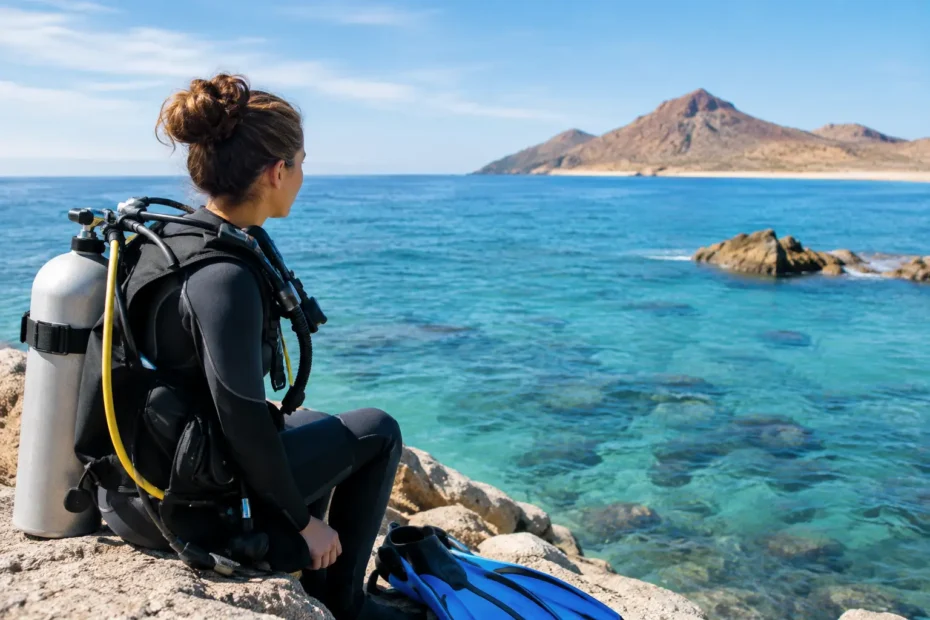
Cabo Pulmo is not the kind of dive destination where you roll out of a giant resort, grab a quick coffee, and disappear beneath the water five minutes later. This is a small, protected village on Baja California Sur’s East Cape, with a living coral reef, wide-open Sea of Cortez horizons, and a wonderfully unhurried rhythm. To prepare for Cabo Pulmo diving, think beyond your certification card: arrive rested, choose the right season for your comfort, and give yourself enough time to enjoy the place properly.
The reward is exceptional. On a good day, you may descend through clear blue water beside schooling jacks, sea turtles, sea lions, rays, reef fish, and the occasional larger pelagic visitor. But Cabo Pulmo is a national marine park, not a manufactured attraction. Conditions change, boat departures follow the weather, and the best trips are planned with a little flexibility.
Start with the right expectations
Cabo Pulmo is known for healthy reefs and impressive fish biomass, but it remains a natural environment. Visibility, surface chop, current, and water temperature vary by season and even by day. A calm morning can become breezy by afternoon, particularly when seasonal winds are active.
Most local dive sites are reached by small panga boats. That is part of the charm, but it also means divers should be comfortable with a more personal, less resort-style operation. You may help pass gear aboard, enter with a giant stride or back roll depending on the boat, and make a beach landing after the dive. Good operators handle the logistics, yet a relaxed attitude and reasonable mobility make the day much more enjoyable.
If you are traveling with a non-diving partner, Cabo Pulmo can still work beautifully. Snorkeling, beach time, kayaking when conditions allow, desert scenery, and the simple pleasure of a quiet East Cape village create a rewarding day without everyone needing to wear a tank.
Make sure your diving skills match the day
You do not need to be an elite technical diver to enjoy Cabo Pulmo. Open Water certified divers can visit many sites with an appropriate guide and conservative planning. Still, recent experience matters more than the number printed in your logbook.
If your last dive was several years ago, schedule a refresher before your Cabo Pulmo day or plan one at the beginning of your Baja trip. You will enjoy the reef far more when basic tasks feel automatic: clearing a mask, recovering a regulator, checking air, controlling your descent, and maintaining neutral buoyancy without kicking the bottom.
Buoyancy is part of reef protection
The coral and rocky reef habitat here deserve careful divers. Good buoyancy is not just a matter of looking polished underwater. It prevents accidental contact with coral, avoids stirring up the bottom, and lets you hover calmly while a school of fish circles around you.
Practice holding a safety-stop depth, keep hoses and gauges secured, and resist the urge to chase wildlife. Sea lions may choose to investigate you. Turtles may glide past. The privilege is being present for those moments without turning them into a pursuit.
Be honest about comfort in current and chop
Some days are glassy and gentle. On others, there can be current underwater or a bumpy ride on the surface. If you are prone to seasickness, do not wait until you feel green on the dock. Discuss prevention with your physician before travel and use the medication or remedy that works safely for you.
Tell your guide if you are anxious, returning after a long break, or uncomfortable with currents. A professional guide would rather adjust the plan, choose a more sheltered site, or pair you appropriately than discover a concern after you are already in the water. There is no prize for pretending to be tougher than you feel.
Choose the season for your preferred water temperature
Cabo Pulmo diving is possible through much of the year, but the experience changes with the seasons. Summer and early fall generally bring warmer water, often in the mid-to-high 70s or warmer, and can be especially appealing to divers who dislike thick neoprene. These months can also bring warmer air and the possibility of tropical weather, so itinerary flexibility is sensible.
Winter and spring usually mean cooler water, with temperatures that may call for a 5 mm or 7 mm wetsuit depending on your tolerance. The air can be glorious, the desert is often at its most comfortable, and the water may offer excellent visibility. Every season has trade-offs. The right choice depends on whether you prioritize warm water, wildlife possibilities, comfortable land temperatures, or a broader Baja itinerary.
Ask in advance what exposure protection is recommended for your travel dates. A wetsuit that is technically adequate but leaves you shivering after 35 minutes will shorten your enjoyment quickly. If you run cold, bring a hooded vest or ask whether one is available.
Pack for a remote coastal village, not a city marina
Cabo Pulmo’s remoteness is exactly why many travelers love it. It is also why last-minute shopping options are limited. Bring the personal items that make you comfortable, especially prescription medications, spare contact lenses, a swimsuit, sun protection, and a light layer for early starts or breezy evenings.
For divers, confirm what your operator provides before packing a full gear bag. Rental equipment is often available, but fit and familiarity are personal. Many experienced divers prefer to bring their own mask, dive computer, regulator, and exposure suit while renting tanks, weights, and BCD locally. Others travel light and rent everything. Either approach is fine if it is arranged in advance.
A few details are easy to overlook:
- Bring certification cards or a reliable digital copy, along with dive insurance details if you carry coverage.
- Pack a reusable water bottle, dry bag, towel, and a hat that stays put in the wind.
- Use reef-conscious sun protection and cover up with a rash guard or lightweight shirt when possible.
- Keep electronics and valuables protected from salt spray, sand, and wet boat decks.
Do not arrive with brand-new equipment you have never used. A new mask can leak, a new computer can be confusing, and an unfamiliar BCD can affect buoyancy. Test new gear at home or during an easy checkout dive before the main event.
Plan travel days conservatively
One of the most common avoidable mistakes is treating Cabo Pulmo as a rushed day trip squeezed between flights. The road in can be slow, and the pace of the village rewards travelers who stay at least one or two nights. You do not want to begin your dive day exhausted from a long transfer, dehydrated from travel, or worried about making an evening flight.
Leave at least 18 to 24 hours between your final dive and flying. More time is better after multiple dives or several days underwater. This is standard dive safety, not a suggestion to negotiate with because the airfare looked convenient.
Hydrate well the day before and the morning of your dives, but avoid overdoing alcohol the night before. Eat a light breakfast with some protein and carbohydrates. Baja sunshine can be deceptive, especially when you are focused on gearing up, carrying equipment, and enjoying the view.
Respect the park and let the wildlife set the terms
Cabo Pulmo National Park exists because decades of protection allowed a remarkable marine ecosystem to recover. Visitors are part of that success when they follow the rules and choose operators who take conservation seriously.
Do not touch coral, feed fish, collect shells, or handle marine animals. Keep a respectful distance from turtles, rays, sea lions, and any animal that appears. A guide may point out wildlife or position the group well, but the encounter should always remain on the animal’s terms.
Photography deserves the same discipline. Secure your camera, know your controls before descending, and do not settle onto the reef to get a shot. If managing camera settings distracts you from buoyancy, leave it on the boat for that dive. The best souvenir may be the one you remember clearly rather than the blurry image you fought to capture.
Let local planning remove the guesswork
A Cabo Pulmo dive day involves more than selecting a site. The quality of the experience depends on weather, sea state, current, your certification and recent experience, equipment needs, transport timing, and who is traveling with you. That is where personal local guidance makes a genuine difference.
At Sunny Adventure Travel, I help guests fit Cabo Pulmo into a wider Baja California Sur journey without turning it into a logistical puzzle. I personally consider the road, the boats, the captains, the conditions, and the comfort level of every guest – divers and non-divers alike. Sometimes the best plan is two relaxed mornings in Cabo Pulmo. Sometimes it is pairing the reef with La Paz, the East Cape, or another marine wildlife experience.
Come for the ocean. Stay for the people. When you are ready, contact Sunny Adventure Travel to explore a private Cabo Pulmo adventure or a small-group Baja expedition designed around the way you actually want to travel.