


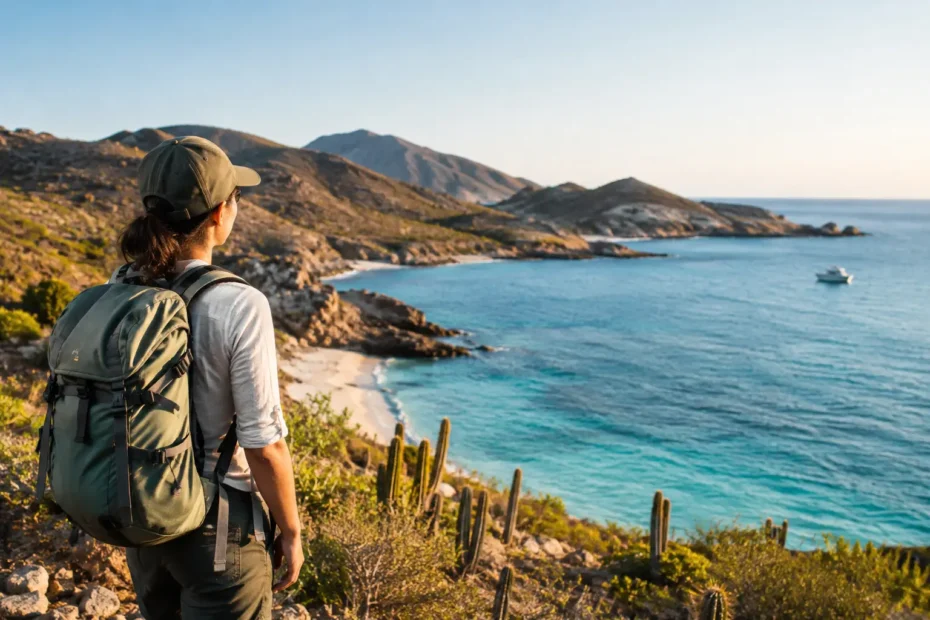
A sea lion rockets past your mask at Los Islotes. A gray whale calf surfaces beside a panga in Magdalena Bay. The desert glows copper on the drive back to La Paz. These are the moments that make Baja California Sur extraordinary – and they are exactly why sustainable Baja tourism cannot be treated as a trendy add-on.
This peninsula is wonderfully wild, but it is not indestructible. Its clear water, nesting beaches, reef life, fishing villages, whale nurseries, and desert trails all carry pressure when travel is poorly planned. The good news is that a thoughtful vacation can support the places and people that make Baja so special. You do not have to trade comfort, beautiful hotels, or first-class adventure for responsible choices. You simply need to travel with care and choose the right partners.
What Sustainable Baja Tourism Really Means
Sustainable travel in Baja is not about arriving with a reusable water bottle and calling it a day. That helps, of course, but the bigger decisions happen before you board the plane and every time you choose a boat, guide, hotel, restaurant, or activity.
In practical terms, sustainable Baja tourism means traveling in ways that reduce harm to fragile ecosystems, respect wildlife boundaries, keep spending circulating through local communities, and favor operators who run safe, legal, well-managed experiences. It also means accepting that the most memorable encounter is not always the closest one.
A whale does not need a crowd of boats chasing it to create a lifelong memory. A sea turtle nesting beach does not need visitors wandering through after dark. The privilege of seeing wild Baja is paired with a responsibility to leave it wild enough for the next traveler – and, more importantly, for the people and animals who call it home.
Choose the Boat and Captain as Carefully as the Destination
Many of Baja Sur’s finest experiences happen on the water. That makes your marine operator one of the most important choices of the trip.
A quality captain reads conditions, keeps a respectful distance from wildlife, avoids reckless approaches, carries proper safety equipment, and knows when to turn back. This is not a minor detail. The Sea of Cortez can look calm from shore and become choppy fast, while seasonal wind and swell can change an outing completely. The captain who says, “Not today,” when conditions are wrong may be protecting both your safety and the place you came to see.
For whale watching, snorkeling, diving, and island trips, small groups are usually the better choice. Fewer guests can mean less noise, less crowding, more room for careful instruction, and a more personal experience. It can cost more than a packed bargain boat, but it often delivers better value: a capable crew, well-maintained equipment, sensible timing, and a day that does not feel like a floating parking lot.
Ask how an operator handles wildlife encounters. Do they slow down near animals? Do they limit time with a pod or colony? Do they avoid feeding, touching, or surrounding wildlife? Are they transparent when sea conditions make a planned route unrealistic? The answers tell you a great deal.
Let Wildlife Set the Terms
Baja’s marine life is not a performance. Sea lions, dolphins, whale sharks, mobulas, whales, turtles, and migratory birds are going about their lives in an environment that has become increasingly popular with visitors.
The best guides understand animal behavior and help guests become better observers. With whale sharks, that may mean entering the water quietly, maintaining space, and swimming alongside rather than racing toward the animal. At a sea lion colony, it means enjoying the curiosity of the younger animals without crowding them or forcing contact. With whales, it means letting the captain follow applicable rules and the animals’ behavior, even when that means a quieter, more distant sighting.
There is a trade-off here. The dramatic social-media shot may come from getting too close, staying too long, or ignoring a guide’s instruction. But the story worth bringing home is different: you met wild animals without asking them to change their behavior for you.
Never touch marine animals, chase them, feed them, stand on coral or rocky reef habitat, or take shells and natural objects from protected areas. Those choices sound obvious, yet small actions repeated by thousands of visitors add up quickly.
The right season matters
Traveling at the right time can reduce pressure and improve the experience. Some wildlife activities are seasonal for biological reasons, while weather patterns shape what is safe and enjoyable on the water. A responsible itinerary does not force a February experience into August or promise glassy seas during a windy stretch of the year.
Flexibility is part of ethical travel. Build in time for a weather adjustment, choose alternatives that still excite you, and trust local advice. A desert food experience, a cultural day in La Paz, or a protected-bay snorkel trip can save the day when offshore conditions say no.
Spend Where Your Visit Has a Local Benefit
Baja Sur is more than resorts and marinas. It is family-run restaurants, fishers, artisans, drivers, ranch communities, dive professionals, cooks, and boat crews whose knowledge turns a vacation into a real connection with the peninsula.
Choose locally owned businesses when you can, especially for guiding, dining, transportation, and smaller excursions. Tip fairly when service is good. Ask your guide where they eat on their day off. Order regional seafood thoughtfully and be open to seasonal options rather than demanding a particular species year-round.
This does not mean every choice must be rustic. You can enjoy a private villa, a luxury resort, a beautifully prepared dinner, and a premium liveaboard while still caring about who operates it, how it manages waste, how it hires staff, and whether it respects local regulations. Responsible travel is not about roughing it. It is about directing your travel budget with intention.
Be Smart About Water, Waste, and the Desert
Baja is a dry place. Fresh water is precious, even when your hotel room has a rain shower and the pool looks irresistible. Take shorter showers, reuse towels when appropriate, and do not run taps unnecessarily. These are small habits, but water demand is a serious reality in desert destinations.
Single-use plastic is another easy place to make a difference. Carry a refillable bottle, keep a small reusable bag for snacks or wet gear, and avoid leaving anything behind on beaches, boats, or trails. Wind can turn one forgotten wrapper into ocean debris quickly.
When exploring on land, stay on established routes. Off-road driving may look adventurous, but it can damage desert plants, disturb wildlife, and scar terrain that recovers slowly. The Baja desert is not empty space between beaches. It is a living landscape full of quiet detail, from cactus forests to birdlife to fragile arroyos.
Responsible Travel Should Still Feel Effortless
Planning a lower-impact trip takes local knowledge. You need to know which outings suit your group, which operators have earned trust, how much activity is realistic in the heat, and when a private experience is worth the investment. You also need someone willing to be honest when an idea sounds glamorous but does not fit the season, your comfort level, or the conditions.
That is where a carefully designed itinerary changes everything. At Sunny Adventure Travel, I personally consider the boats, captains, timing, logistics, and energy level behind every experience, so you can focus on the fun part: watching the horizon for a whale breach, sharing fresh ceviche after a swim, and feeling wonderfully far from the ordinary.
A sustainable trip should never feel like a lecture or a checklist. It should feel better because it is better planned. You move through Baja with more confidence, meet people who genuinely know the region, and experience nature without treating it as a backdrop for a hurried vacation.
Leave Baja with sandy shoes, salt in your hair, and a little more respect for the remarkable place that hosted you. That is the kind of souvenir that lasts.