


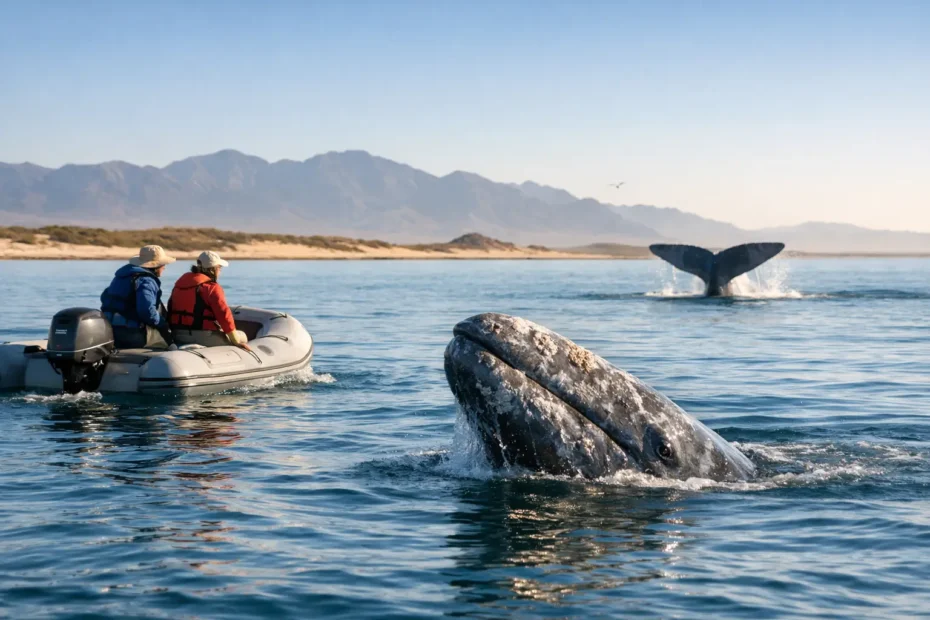
The first sound is often the one people remember: the soft exhale of a whale breaking the glassy morning surface, followed by a ripple of pure disbelief around the boat. Whale tourism in Baja California Sur can deliver that kind of moment, but the best encounters are not about chasing a photo or packing as many sightings as possible into one day. They are about being in the right place, with the right captain, at the right time, and giving these extraordinary animals the room to choose the interaction.
Baja is one of the world’s great whale regions. Its Pacific lagoons shelter migrating gray whales. The Sea of Cortez can bring humpbacks, fin whales, blue whales, and other visitors through seasonal feeding grounds and migration routes. Yet Baja is a large peninsula, its seasons shift, and the ocean does not follow a brochure. A thoughtful plan makes the difference between a good boat ride and the sort of marine encounter that changes how you see the sea.
Why Whale Tourism in Baja Feels Different
Baja California Sur offers something increasingly rare: wild nature that can still feel close, personal, and uncrowded when you plan it well. One day may begin in a quiet fishing village with coffee in hand and pelicans on the dock. A few hours later, you may be watching the mist from a whale’s breath dissolve into desert light, with mountains or dunes on the horizon.
This is not an aquarium experience. Whales are never scheduled performers, and that is precisely the point. A respectful outing carries an element of uncertainty. Some days bring repeated breaches, curious calves, and unforgettable surface activity. On others, the reward is quieter: a distant fluke, a mother and calf traveling steadily, or the privilege of observing a massive animal on its own terms.
That uncertainty is easier to enjoy when the logistics are handled properly. Sea conditions, travel times, boat design, captain experience, comfort onboard, and the group’s interests all matter. A couple celebrating a honeymoon may want a private charter with shade, refreshments, and a relaxed pace. A family with younger children may need a shorter route and a captain who understands that bathroom access, snacks, and seasickness planning are part of a successful wildlife day. Serious photographers may prefer an early departure, a smaller group, and realistic expectations about light and distance.
Know Which Whales You Hope to See
The phrase “whale watching” can sound simple until you look at Baja’s geography. Different species arrive in different regions and at different times, so choosing the right base is the first smart decision.
Gray whales and the Pacific lagoons
Gray whales are Baja’s most celebrated winter visitors. They migrate thousands of miles from Arctic feeding grounds to breed and calve in protected Pacific lagoons. The lagoons around Magdalena Bay, San Ignacio, and Ojo de Liebre are famous for seasonal gray whale encounters, generally from late winter into early spring.
Magdalena Bay is often the most practical option for travelers based in La Paz, although it is still a substantial day trip. It is worth treating as a full experience rather than a rushed checkbox. The journey crosses Baja’s dramatic interior, from coastal city to wide desert and Pacific marshland, before you board a local panga with a licensed operator.
In the right conditions, gray whales can be remarkably curious. Sometimes they approach boats. Sometimes they do not. Nobody should promise a close encounter, and no responsible guide will try to force one. The magic lies in waiting quietly, following local rules, and letting the whales set the terms.
Humpbacks, blues, and the Sea of Cortez
The Sea of Cortez has a different personality. Depending on the season and location, travelers may see humpback whales, fin whales, pilot whales, dolphins, and occasionally blue whales. Blue whale opportunities are especially associated with the Loreto area during the winter and early spring, though sightings are never guaranteed.
Humpbacks are the ocean’s show-offs when conditions align. A breach can happen in an instant, followed by a few stunned seconds as everyone on the boat tries to process what they just saw. But even without acrobatics, watching a humpback surface, lift its tail, and disappear into cobalt water is a powerful sight.
La Paz is a wonderful base for marine life, beaches, snorkeling, and island excursions, but it should not be marketed as the answer to every whale wish list. The best itinerary may combine La Paz with a Pacific lagoon journey, or send dedicated whale enthusiasts north toward Loreto. It depends on your dates, tolerance for driving, preferred level of comfort, and the species that matter most to you.
The Best Time to Plan Your Trip
For gray whale-focused travel, January through March is typically the sweet spot, with timing varying by lagoon and year. This period also gives many visitors pleasant Baja weather, although mornings can be cool and windy afternoons are common.
For blue whale interest around Loreto, winter through early spring is generally the window travelers watch most closely. Humpbacks may be encountered across a broader portion of the winter season. If whales are the centerpiece of your vacation, build flexibility into the itinerary. Give yourself at least two possible outing days rather than placing all expectations on one boat trip.
That extra day is not wasted if the sea gets rough or the whales prove elusive. Baja has plenty to offer between outings: a long lunch with fresh seafood, a desert drive, a quiet beach, or a sunset over the malecón. The ocean rewards travelers who leave a little breathing room in the schedule.
What Responsible Whale Encounters Look Like
The most memorable wildlife experiences are often the gentlest ones. Responsible whale tourism means using permitted operators, respecting designated viewing distances and speed restrictions, avoiding crowded approaches, and never harassing or surrounding an animal.
A good captain reads the situation. If a whale changes direction, shows signs of stress, or is traveling with a young calf, the boat gives space. If several vessels are already present, the captain may move on rather than adding to the pressure. This can feel less dramatic than a captain racing toward every blow on the horizon, but it is better for the whales and usually better for your day.
Ask practical questions before booking. Is the operator licensed for the area and season? How many guests will be onboard? Is there shade and proper safety equipment? How long is the ride to the viewing grounds? What happens if weather changes? These questions are not fussy. They are how you protect your vacation time and make sure your money supports a quality experience.
I also recommend being honest about your comfort level. Pangas are wonderfully capable local boats, but they can be bumpy. Larger vessels may offer more space and stability, while smaller boats can provide a more intimate experience. The right choice is not always the fanciest one. It is the one that suits your group, the route, and the conditions that day.
Prepare for the Ocean, Not Just the Photos
Bring layers, even on a sunny Baja morning. Wind on the water can feel surprisingly cool, and a light waterproof layer is useful during spray or sudden weather changes. Use reef-safe sun protection, a secure hat, polarized sunglasses, and a camera strap if you are bringing gear. Keep your phone in a dry pouch. I have watched more than one beautiful vacation photo collection disappear overboard before lunchtime.
If you are prone to motion sickness, prepare before you board. Eat a light breakfast, hydrate, avoid too much alcohol the night before, and discuss medication with your healthcare provider ahead of time. Do not wait until you are green around the gills and halfway to the whales. A small amount of preparation can save a day you have been dreaming about for months.
Most importantly, put the camera down occasionally. Your photos matter, especially when you are sharing the experience with family back home. But the feeling of a whale surfacing beside a quiet boat does not fit neatly inside a screen. Give yourself a few minutes to simply watch.
Build a Baja Whale Trip Around Your Travel Style
A whale outing should complement the rest of your vacation, not exhaust you. For some travelers, that means a deluxe private day with door-to-door transportation and a carefully selected captain. For others, it means a small-group adventure with fellow nature lovers and a little more spontaneity. Both can be excellent when expectations are clear.
At Sunny Adventure Travel, I help guests match the whale experience to the real trip they want, whether that means a Pacific lagoon day from La Paz, a longer Baja Sur itinerary, or a private adventure designed around comfort, wildlife, and time on the water. I personally care about the details because the details are what allow you to relax when the boat leaves the dock.
Leave room in your Baja calendar for the unexpected. A whale may appear when you least expect it, the sea may ask you to slow down, and the best part of the day may be the silence that follows a single breath on the horizon.